
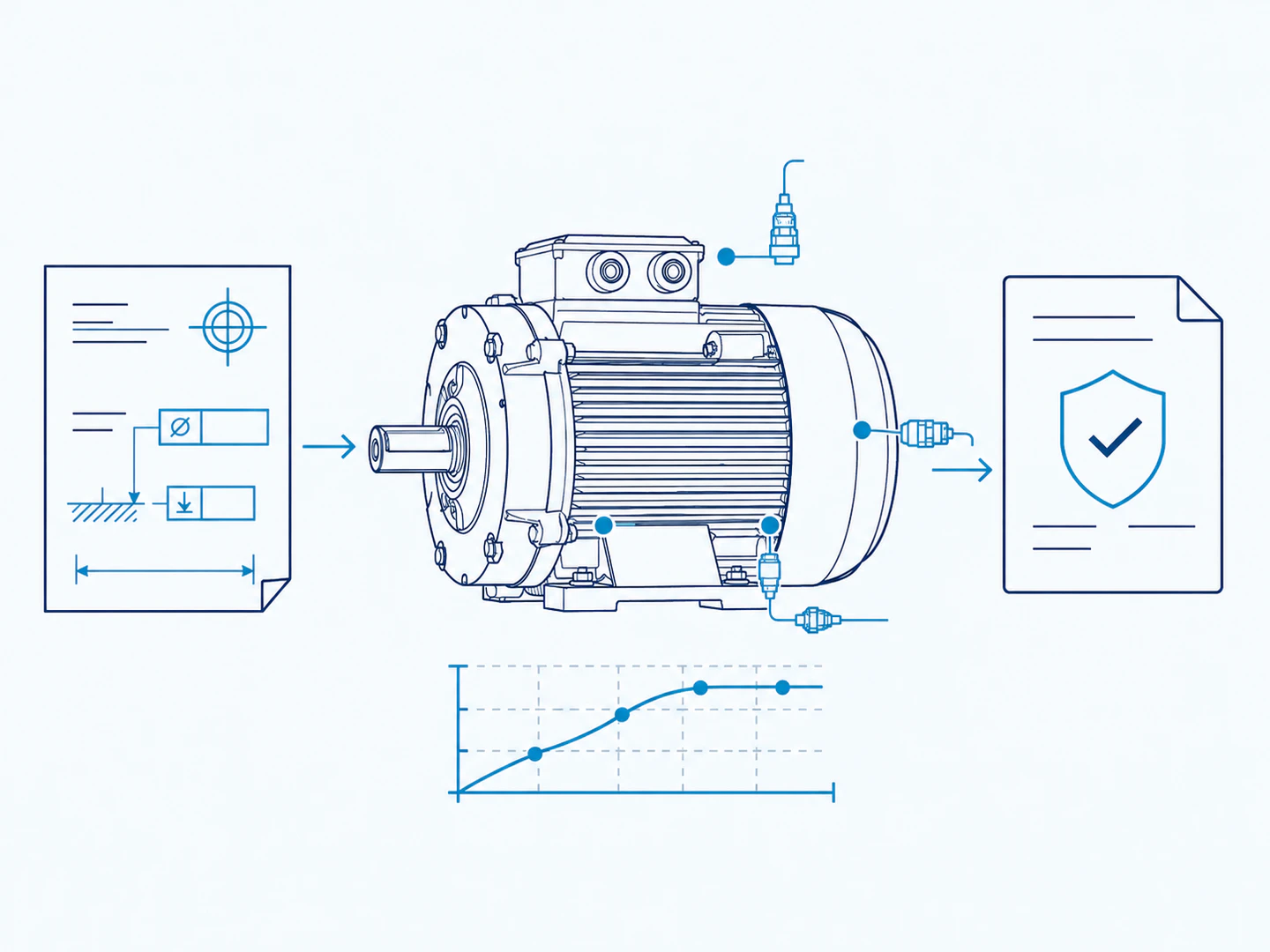
More than a statistical metric
Reliability engineering is interdisciplinary. Probability and statistics meet design engineering, materials, electronics, software and practical product knowledge. Its value lies in connecting these perspectives rather than applying methods in isolation.
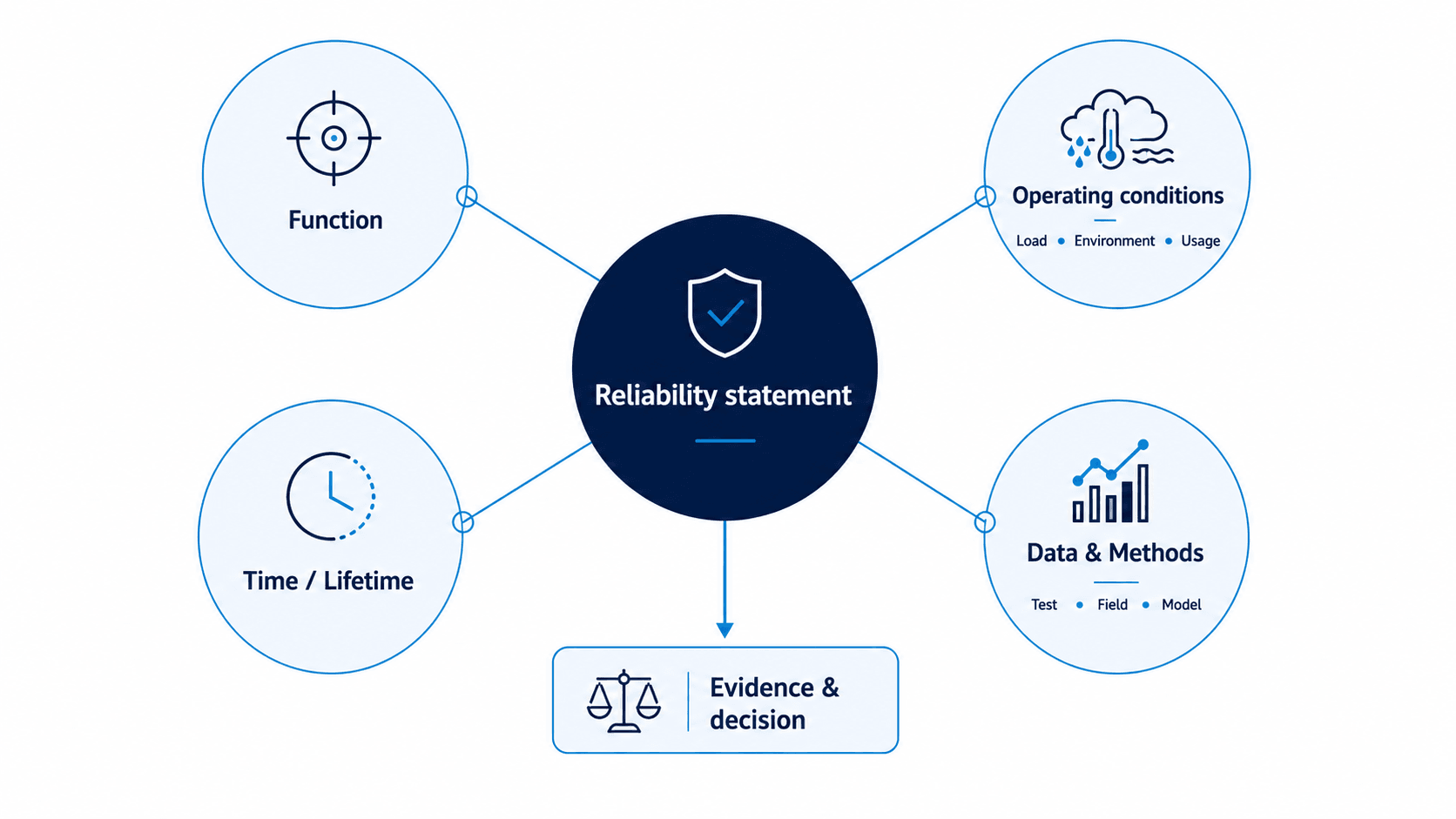
Every reliability statement needs context: the required function, relevant loads and environmental conditions, a time or usage horizon and an acceptable probability of failure. Only then can tests, models and release criteria be defined meaningfully.
A defensible reliability statement connects the required function with operating conditions, a defined time horizon and an appropriate data and method basis.
Technical fields that interact
Planning, weak-point analysis, testing, assurance and prediction are not a rigid sequence. Their importance changes with product maturity and available evidence.
The interfaces matter most. An FMEA without consequences for testing remains incomplete. A lifetime test without a failure-mechanism link may produce data but no robust decision.
- derive measurable reliability targets
- identify weak points and failure mechanisms
- align testing with real use and relevant risks
- build traceable evidence
- use test and field data for prediction
Treat reliability as an economic decision
Reliability work requires development and validation effort. Insufficient reliability, however, leads to returns, warranty cost, downtime, reputational damage and liability exposure. A sound approach makes this trade-off explicit.
The goal is not absolute freedom from failure. It is a transparent treatment of technical uncertainty based on documented assumptions, appropriate data and state-of-the-art engineering practice.