

Semiconductor qualification needs a mission profile, mechanism and statistical evidence
Semiconductor reliability is not established by passing a qualification standard alone. For MOSFETs, IGBTs, sensor ASICs or microcontrollers, engineers must understand which electrical and thermal stresses occur in the application and which mechanisms are covered by HTOL, temperature cycling, humidity or power-cycling tests.
RelTest supports semiconductor reliability, AEC-Q-oriented qualification, DoE, sample and failure planning, and the connection of wafer, package and application data. The result is an evidence chain from mission profile to release, including limitations and residual uncertainty.
Large data volumes do not replace a model of the failure mechanism.
RelTest structures stress conditions, factors and responses so qualification and lifetime data support an engineering claim. DoE creates efficiency without hiding critical interactions.
- TechnologyDefine device, application and relevant degradation mechanisms.
- StressPlan temperature, humidity, voltage and cycling physically.
- StatisticsModel variation, censoring and sample effects correctly.
- QualificationAssess results against target and application transparently.
Qualification logic by semiconductor function
Device type, package and use profile determine which stress can be accelerated and what conclusion is valid.
Power MOSFET or IGBT
Current, blocking voltage, temperature swing and cooling path create cyclic and time-dependent stresses.
Risk fieldBond and solder fatigue, gate-oxide degradation, delamination and rising thermal resistance.
EvidencePower cycling, HTOL, electrical parameters and mission-profile extrapolation with a defined failure limit.
MEMS or sensor ASIC
Mechanical structure, packaging, calibration and signal processing jointly determine measurement quality.
Risk fieldOffset drift, stiction, humidity effects, package stress and gradual parameter change.
EvidenceTemperature-humidity matrix, drift model, lot comparison and measurement-system analysis.
Microcontroller in a safety-related system
Silicon reliability, memory, diagnostics and application load must be treated as one system.
Risk fieldLatent defects, ageing, memory faults, common-cause contributions and insufficient diagnostic coverage.
EvidenceQualification data, FMEDA-related assumptions, field data and application-specific robustness evidence.
Evidence chain from wafer to application
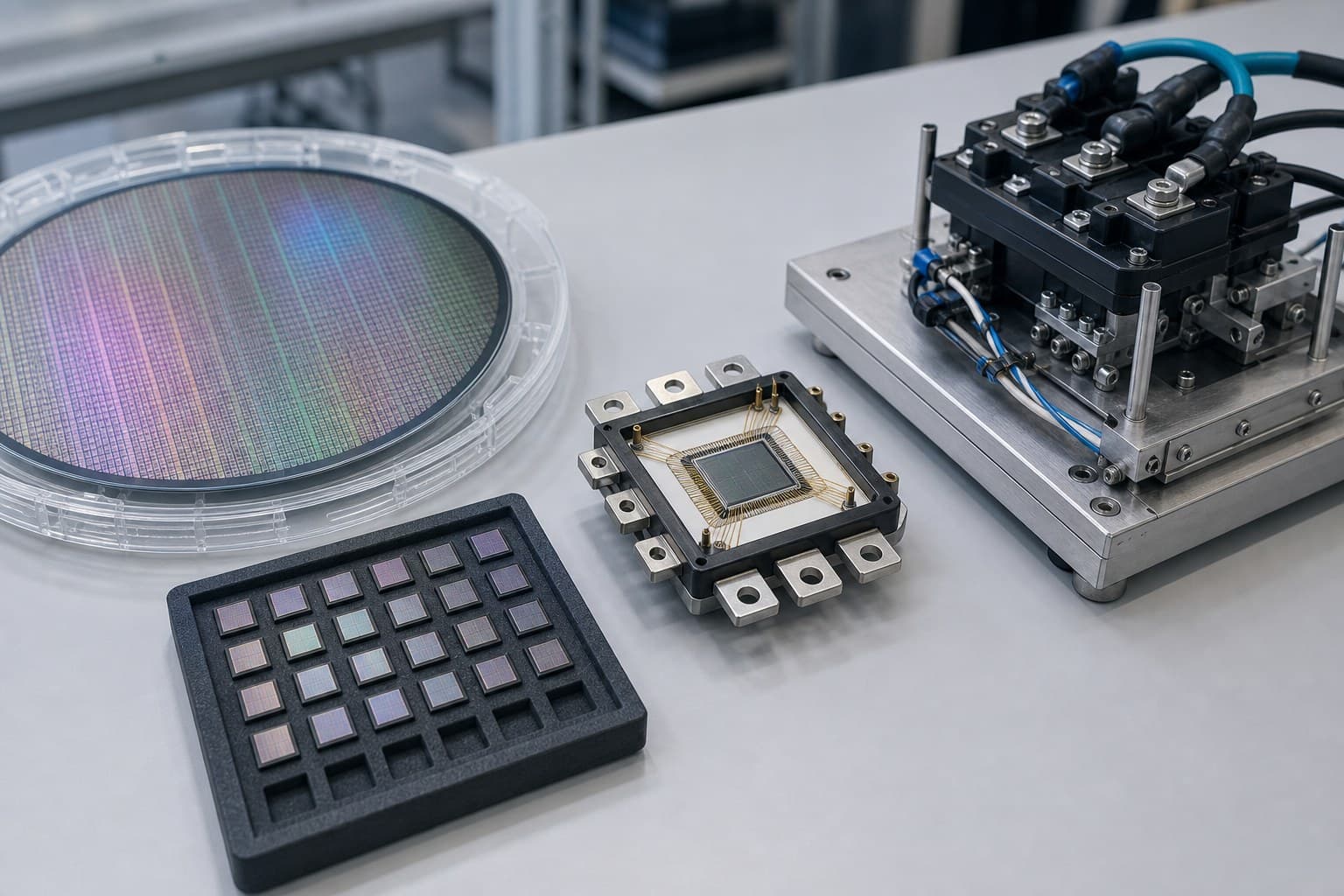
Process data, package qualification and the application load profile answer different parts of the same reliability question. The continuous evidence chain shows what has already been demonstrated and where application-specific gaps remain.
Project example: Derive an application-specific release from generic qualification tests
- Challenge
- A power semiconductor passes standard qualification but is intended for a new profile with larger temperature swings and a longer target life.
- Approach
- RelTest translates the mission profile into relevant stresses, reviews acceleration assumptions, assesses existing qualification and lot data, and plans focused power-cycling or robustness tests.
- Result
- The release separates demonstrated regions, model-based extrapolation and open risk. Additional tests are used only where they can change the decision.
Deliverables: mission-profile translation · evidence and gap assessment · sample and test plan · release argument with uncertainty
Power-cycling test with degradation feature
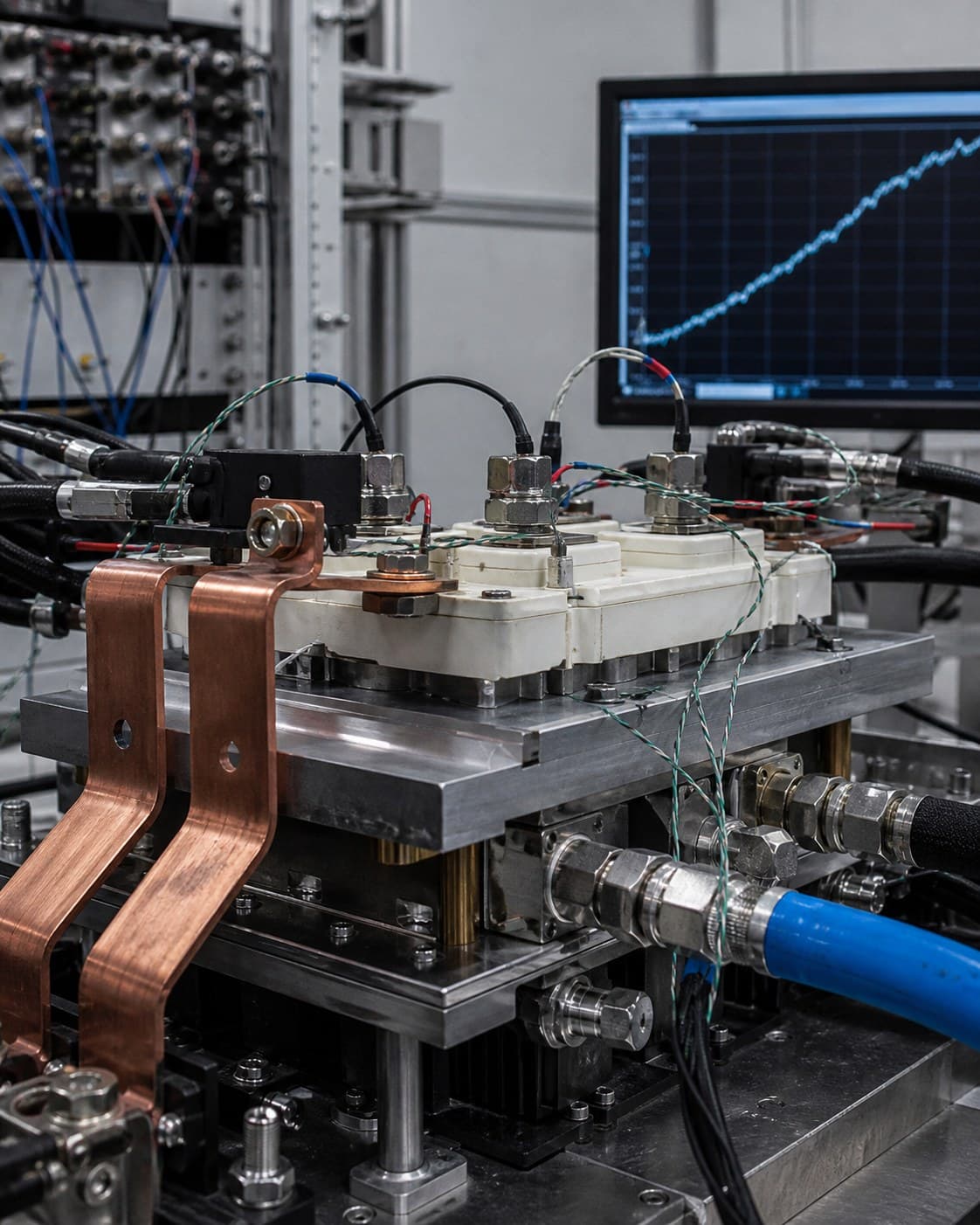
Power cycling is more than counting cycles to failure. Thermal resistance exposes progressive degradation and helps align the acceleration assumptions, stopping criterion and lifetime model.
Robust decisions in data-intensive semiconductor projects
We support product qualification and robust processes as well as reliability questions for manufacturing and test equipment.
Mechanisms and reliability models
We translate technology and use conditions into assessable reliability targets and suitable lifetime models.
Focus areas: Degradation mechanisms · Acceleration models · Reliability targets
Explore serviceQualification and product risks
Risks are prioritised by mechanism, criticality and evidence need. Documentation keeps assumptions and limitations visible.
Focus areas: AEC-Q100 context · Risk assessment · Qualification strategy
Explore serviceDoE and statistical data analysis
We plan efficient factor studies, model response variables and evaluate lifetime and stress data with suitable distributions.
Focus areas: Design of Experiments · Process windows · Life data
Explore serviceTechnical knowledge
DoE, testing and prognosis form a chain from efficient factor investigation to a defensible lifetime statement.
Questions we clarify at project start
Which factors really influence yield and reliability?
DoE separates relevant effects, interactions and measurement variation and creates a model rather than disconnected tests.
Is the acceleration still physically plausible?
Stress level, mechanism and model assumptions are reviewed before extrapolating to use conditions.
How do we compare technologies or process variants?
A shared statistical model prevents sample size or test duration from distorting the comparison.
How can equipment reliability be measured?
Operating, failure and maintenance data reveal availability, failure patterns and prioritised improvement areas.
Engineering context
Considering product, process and equipment together. Semiconductor reliability is created at several interfaces. Our method connects qualification tests with process understanding and equipment reliability.
AEC-Q100 context · IEC 60749 · Power cycling · SEMI E10 metrics