
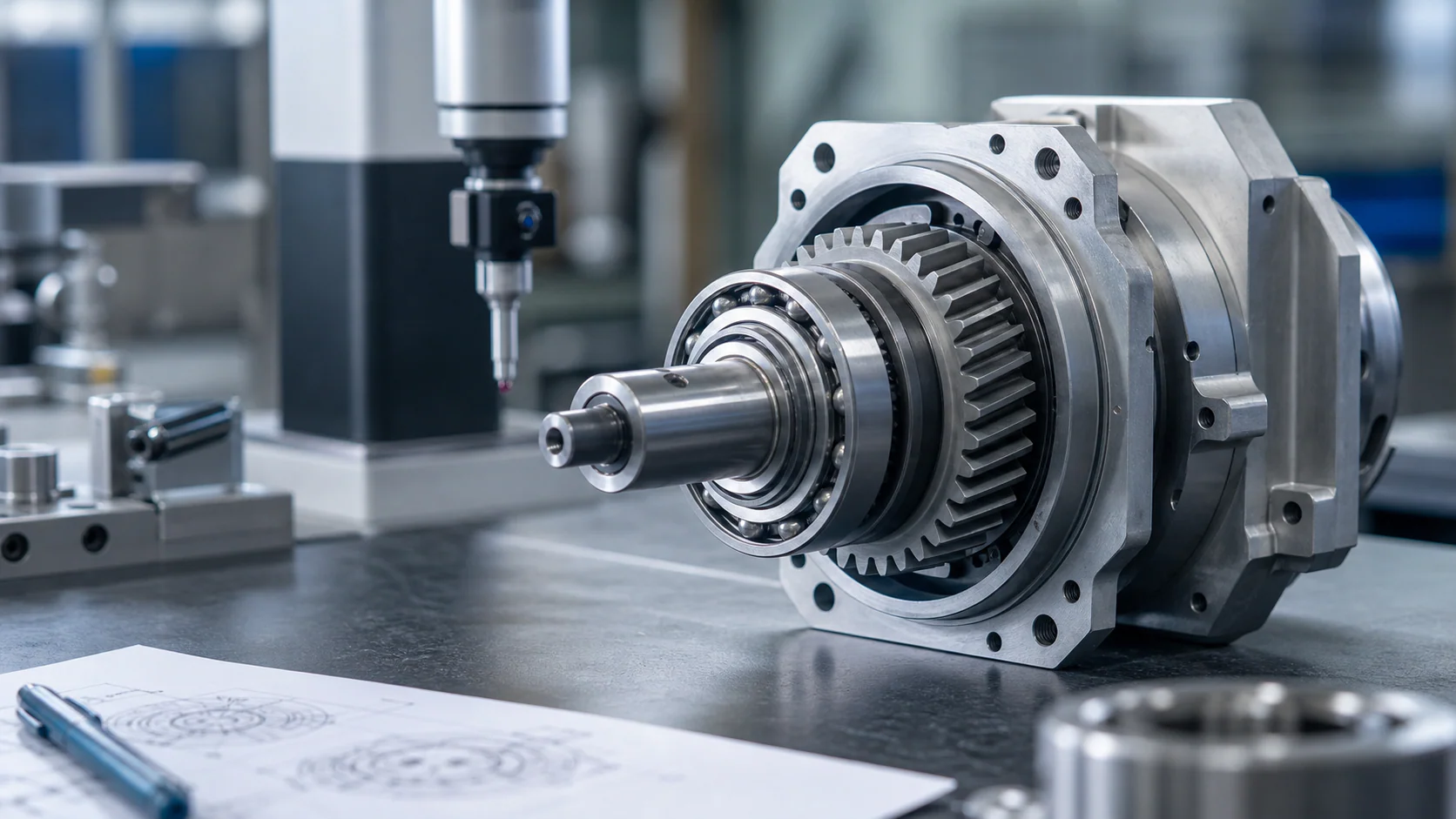
Machine reliability connects lifetime, availability and maintenance
Reliability in mechanical engineering is governed by real load collectives, wear, fatigue, lubrication, contamination and interactions between assemblies. For gearboxes, spindles, hydraulic units or special-purpose machinery, a generic MTBF figure is rarely sufficient.
RelTest develops lifetime models, Weibull analyses, test strategies and availability assessments with explicit system boundaries. Field data, maintenance events and returned-part analysis are connected so that design, operations and service evaluate the same technical cause.
Lifetime becomes robust when loads, mechanisms and data are aligned.
We distinguish wear, fatigue, random failures and systematic weaknesses. The result is a test and assessment model suited to the machine, its operation and the real consequences of failure.
- OperationCapture loads, cycles, environments and maintenance realistically.
- MechanismSeparate wear, fatigue and functional weaknesses.
- DataEvaluate test, failure and operating data statistically.
- ActionImprove design, test strategy or maintenance selectively.
Reliability at the actual machine system
Different products place different failure mechanisms and commercial consequences in the foreground.
Machine-tool spindle
High speeds, changing machining forces and thermal gradients influence precision and bearing life.
Risk fieldBearing fatigue, imbalance, lubrication deficits and thermally induced dimensional deviation.
EvidenceLoad and temperature measurement, condition features, lifetime analysis and a clearly defined precision limit.
Industrial gearbox
Torque peaks, start-stop cycles, oil condition and alignment act on gears and bearings.
Risk fieldPitting, micropitting, bearing failure, seal wear and particle-induced secondary damage.
EvidenceDamage mechanism, load collective, accelerated component test and operating data are aligned.
Hydraulic actuator
Pressure cycles, temperature, fluid and contamination determine function and leakage.
Risk fieldSeal ageing, internal leakage, valve sticking and dynamic functional loss.
EvidencePressure-temperature profile, DoE of influencing factors and a functional degradation limit.
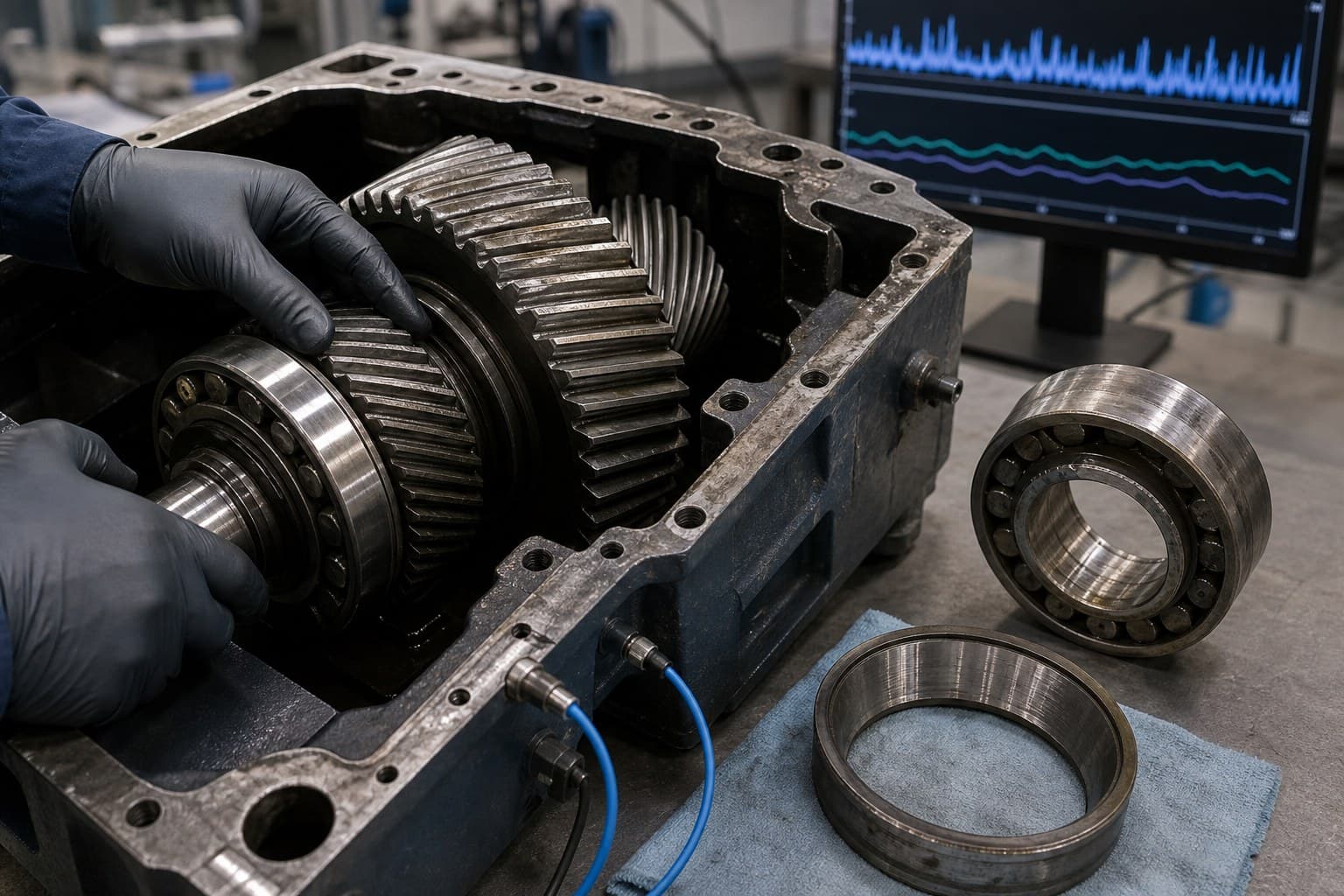
Returned part, load collective and condition data
Gear flank, bearing finding and operating data must be linked to the same failure mechanism. Combining the physical damage pattern with the condition history reveals whether load, lubrication or installation is the dominant contributor.
Project example: Explain recurring bearing damage mechanistically, not statistically alone
- Challenge
- Several machines show similar bearing damage, but failure times and operating hours vary widely. Maintenance and design teams suspect different causes.
- Approach
- RelTest harmonises event definitions, separates censored units from failures, analyses load and lubrication conditions and links Weibull parameters to physical findings.
- Result
- The assessment identifies which population is truly comparable, which mechanism dominates and whether redesign, operating limits or maintenance intervals provide the strongest lever.
Deliverables: data and population definition · Weibull and lifetime assessment · mechanism ranking · action and test recommendation
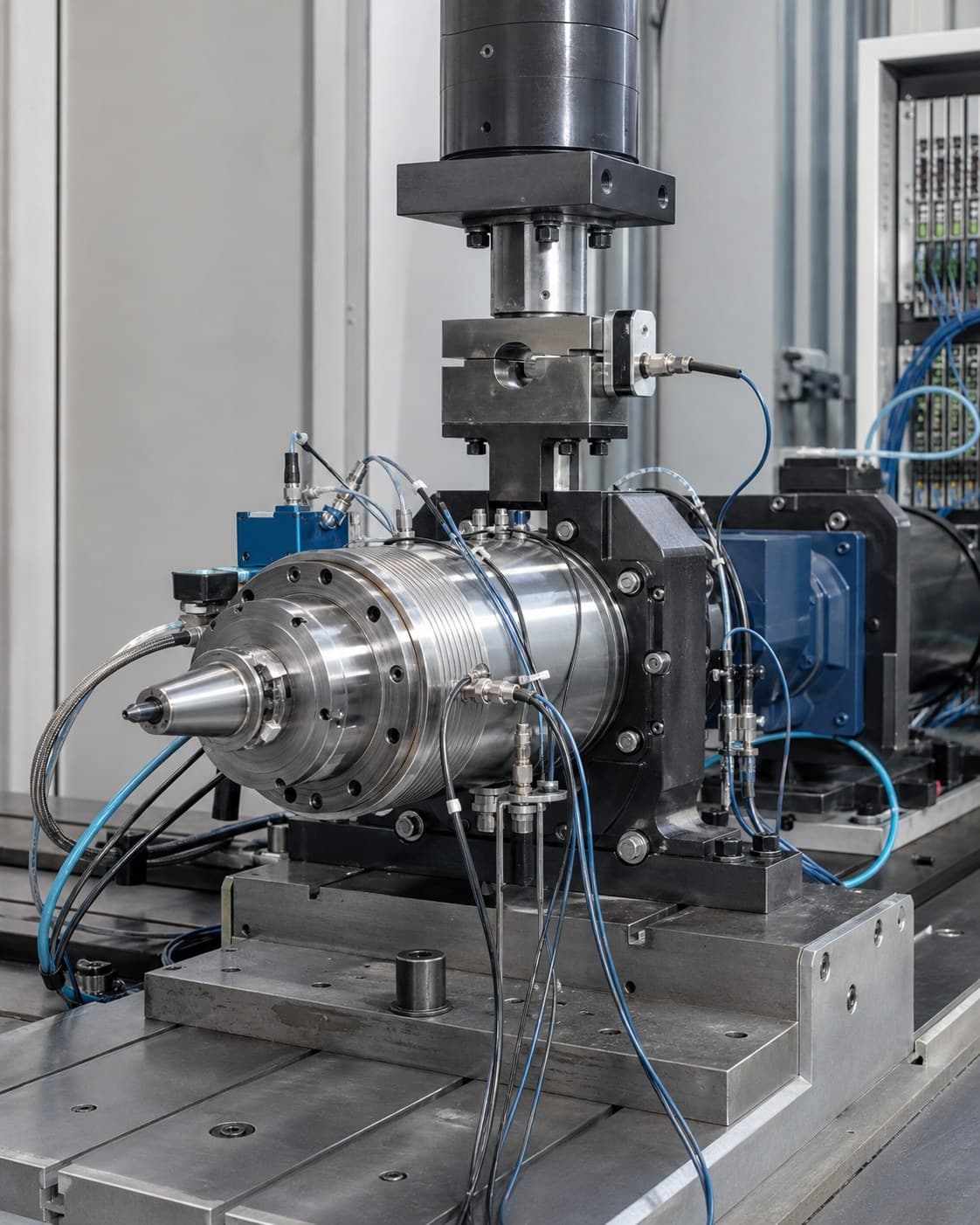
Spindle test under representative machining forces
Force, temperature and vibration are recorded together so that the actual stress on the spindle is known, not merely its running time. This supports representative test profiles and technically justified acceptance limits.
Developing reliable machinery and systems
RelTest supports projects from early design to the assessment of existing field issues. The focus is on traceable decisions, not isolated metrics.
Lifetime and system reliability
We structure reliability targets, assess component and system lifetime and link mechanical failure models to real operating profiles.
Focus areas: Load spectra · Weibull analysis · System reliability
Explore serviceWeaknesses and failure consequences
Technical risks are ordered by cause, effect and commercial relevance so design measures and evidence can be prioritised.
Focus areas: FMEA and FTA · Criticality · State of the art
Explore serviceTest strategy and operating data
We plan lifetime tests, assess small samples and use operating and failure data to support predictions and improvements.
Focus areas: Lifetime testing · Field data analysis · Availability
Explore serviceTechnical knowledge
Lifetime metrics gain engineering meaning only through mechanism, system boundary and observation context.
Questions we clarify at project start
Which components determine system lifetime?
A system view shows which failures actually constrain availability and customer value and where detailed analysis is worthwhile.
How do we transfer test-bench results to operation?
Load, damage and use variation are combined in a transparent transfer model.
Is a field failure random or systematic?
Life data, damage patterns and operating conditions help separate populations and test technical causes.
How much testing is required for release?
Evidence is planned from target, uncertainty, sample and acceptable risk rather than copied from generic test durations.
Engineering context
Connecting design, operation and maintenance. Reliability information is often distributed across calculations, test benches, service reports and experience. We turn it into a shared basis for decisions.
Lifetime and wear · Machinery safety · Availability · Operating and maintenance data