Understand use and loading
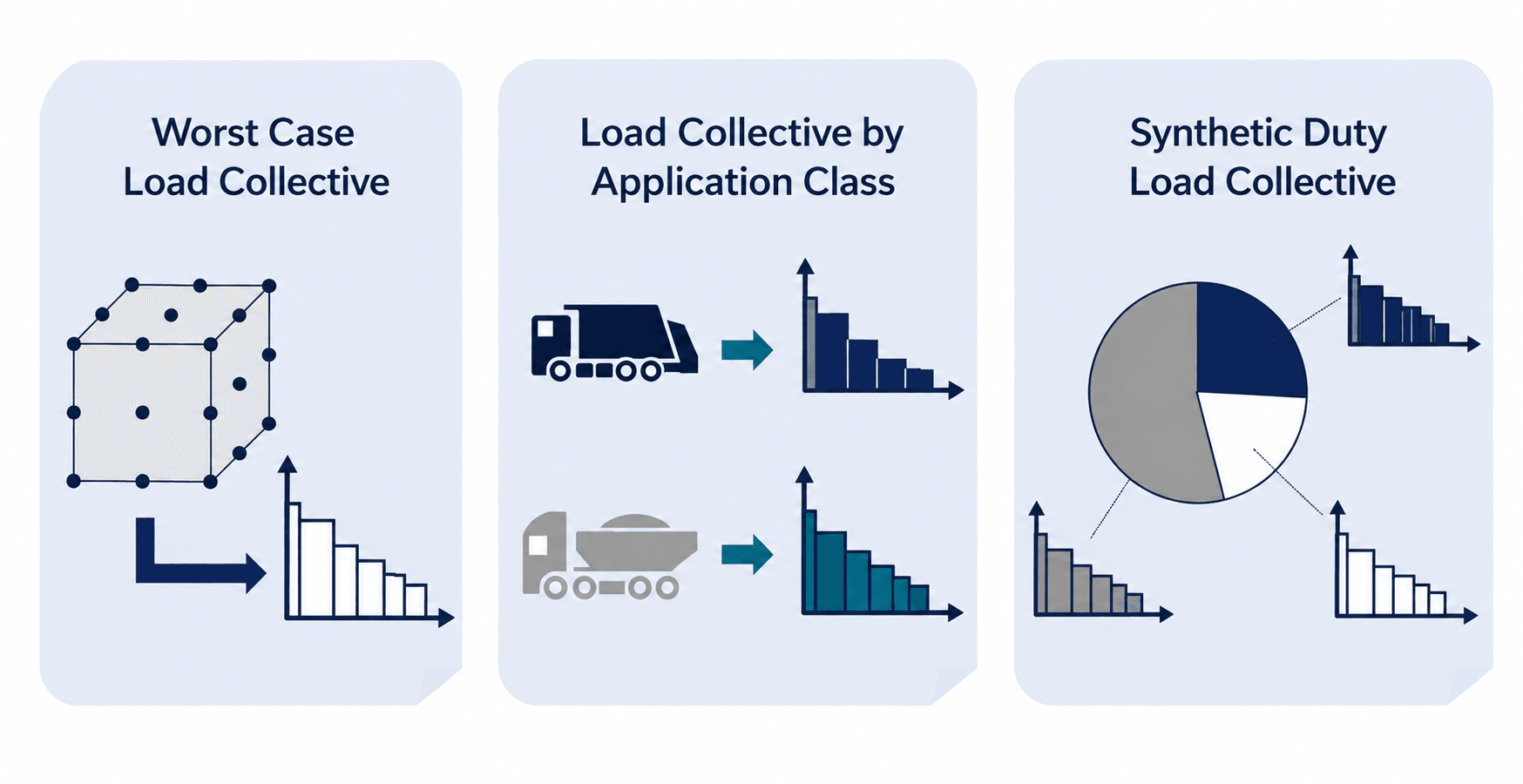
Products experience changing loads, temperature, humidity, contamination and user profiles. Meaningful testing translates this reality into representative load collectives.
Acceleration is valid only when it addresses the same failure mechanism expected in the field.
Separate function and lifetime questions
Function tests verify the required product function under defined conditions. Lifetime tests investigate when relevant failures occur and how strongly they vary.
Sample size, duration and evaluation depend on the intended statement. A passed test is not automatically a reliability demonstration.
Adapt the strategy to product maturity
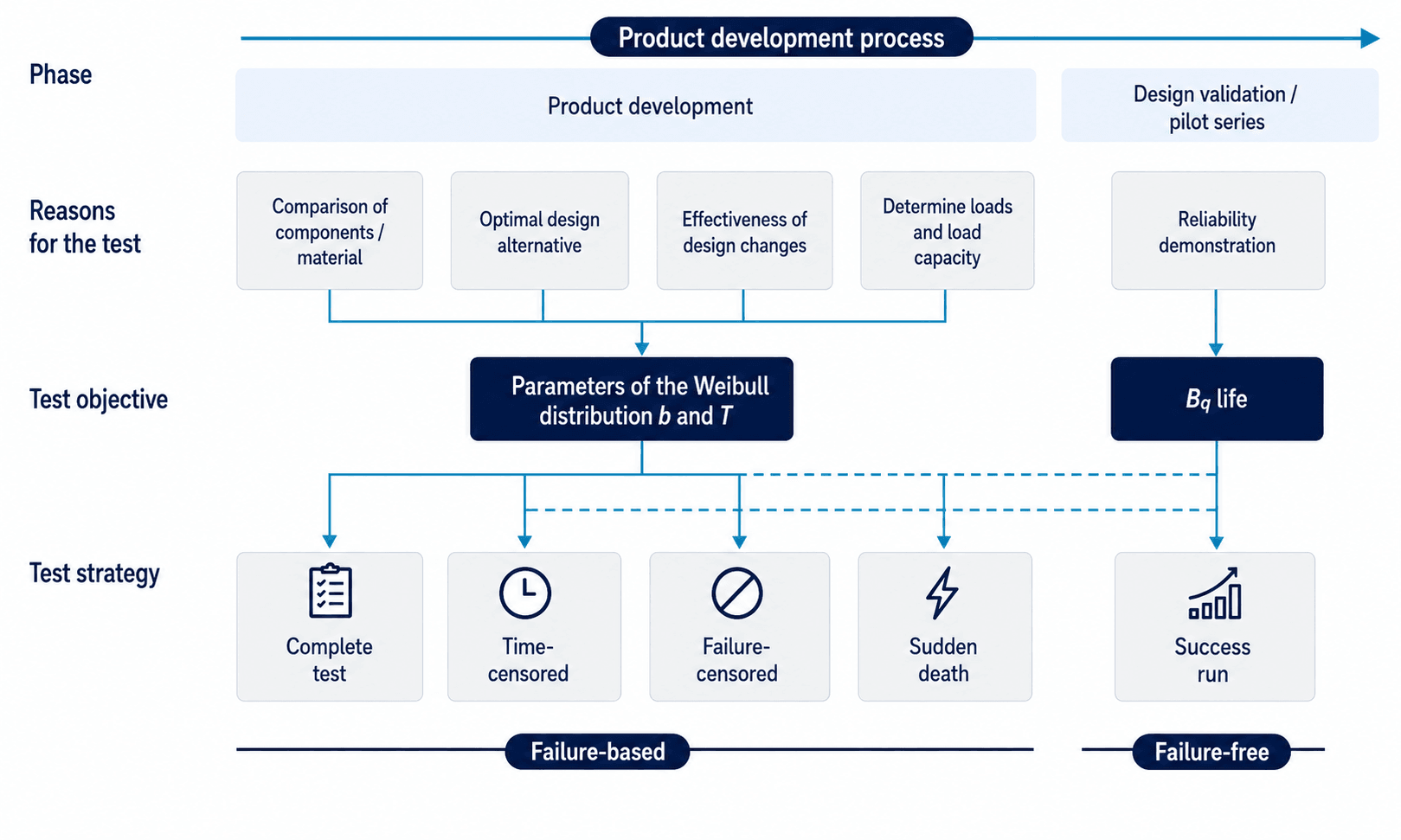
Early prototypes focus on learning and weak-point discovery. Mature products require quantitative evidence and release criteria.
Because tests consume time, samples and capacity, experimental design can improve their information value.
The appropriate test strategy depends on product maturity and objective: early failure-based tests provide distribution parameters, while reliability demonstration can also use failure-free success runs.