From symptom to mechanism
An observed failure is initially a symptom. Effective improvement requires an understanding of the physical, electronic or software mechanism and the conditions that trigger it.
Analysis can start at concept stage and later incorporate test-bench and field evidence.
Use FMEA and FTA deliberately
Design and process FMEA structure possible failure modes, causes and effects. Fault Tree Analysis starts from an unwanted top event and develops the possible causes logically.
Both methods create value when their results lead to concrete design actions and evidence.
Use HALT as an early robustness impulse
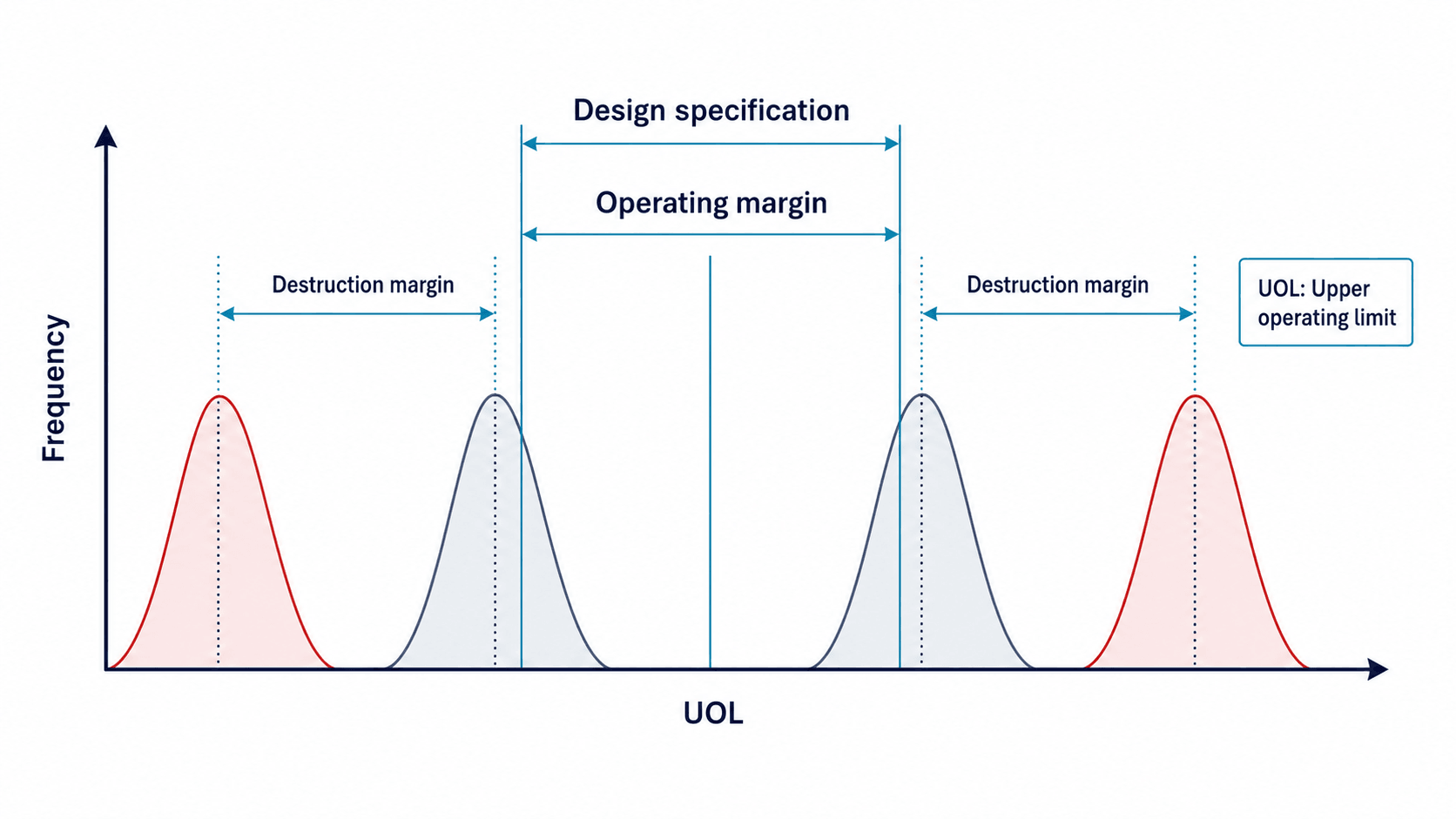
HALT applies stepwise overstress to reveal hidden design limits. It is not a statistical lifetime demonstration.
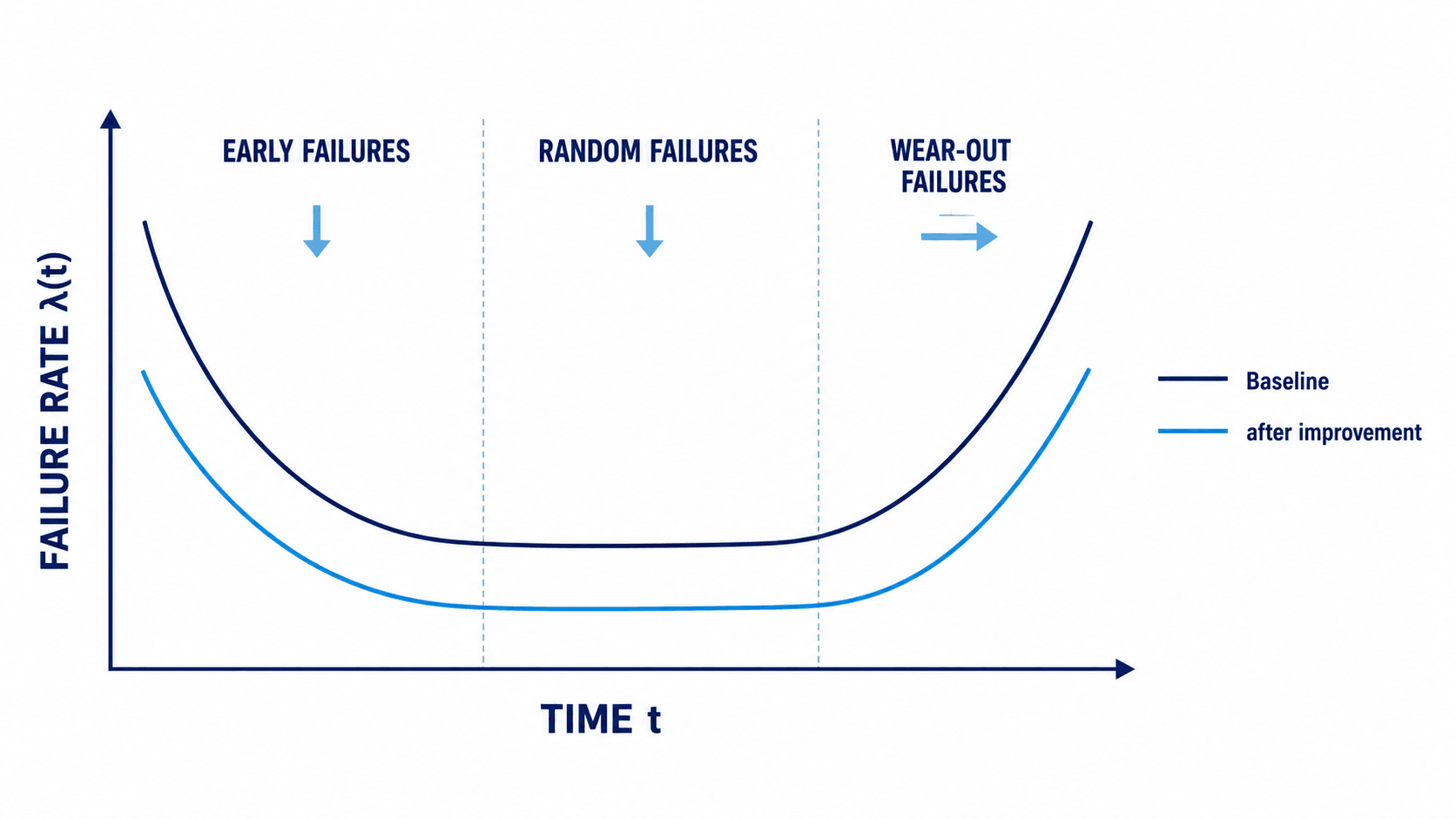
Its benefit comes from the iterative link between stress, failure analysis and product improvement.
HALT deliberately investigates the distances between the specified operating range, actual operating limits and the stresses at which permanent damage occurs.