
Translate expectations into engineering targets
Requirements come from customers, legislation, safety obligations, warranty targets and product strategy. Terms such as high reliability are not actionable until they become measurable targets with defined conditions and failure criteria.
The result must state what is to be demonstrated, under which use profile, for what duration and at what confidence level.
Connect top-down and bottom-up
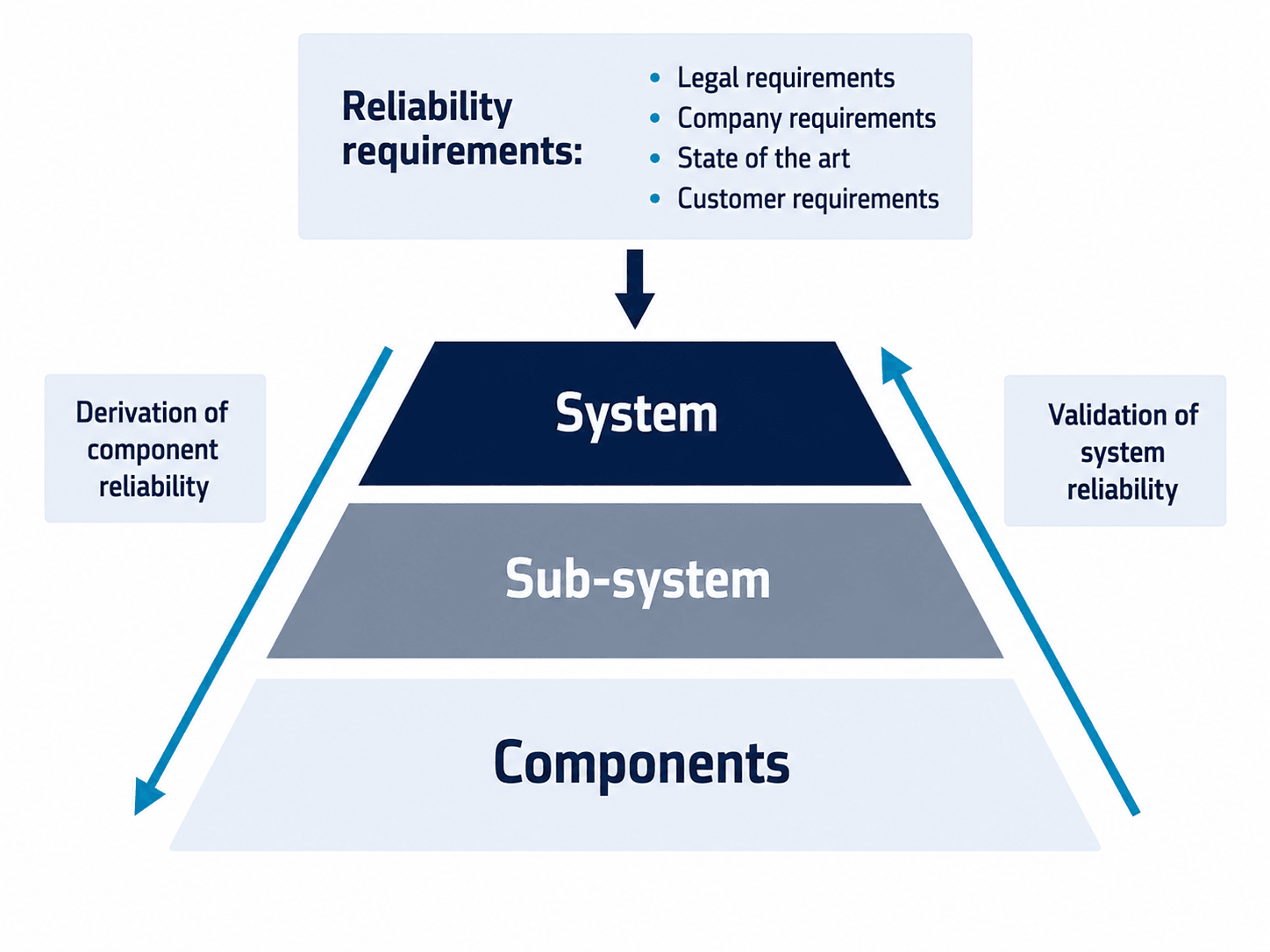
Top-down planning allocates a system target to subsystems and components. Bottom-up assessment checks which system reliability follows from the elements that are actually available.
Using both directions exposes target conflicts early and avoids both under-designed systems and unnecessarily conservative component requirements.
The figure connects reliability requirements with the allocation of system targets down to components and the subsequent validation back at system level.
Make the economic trade-off visible
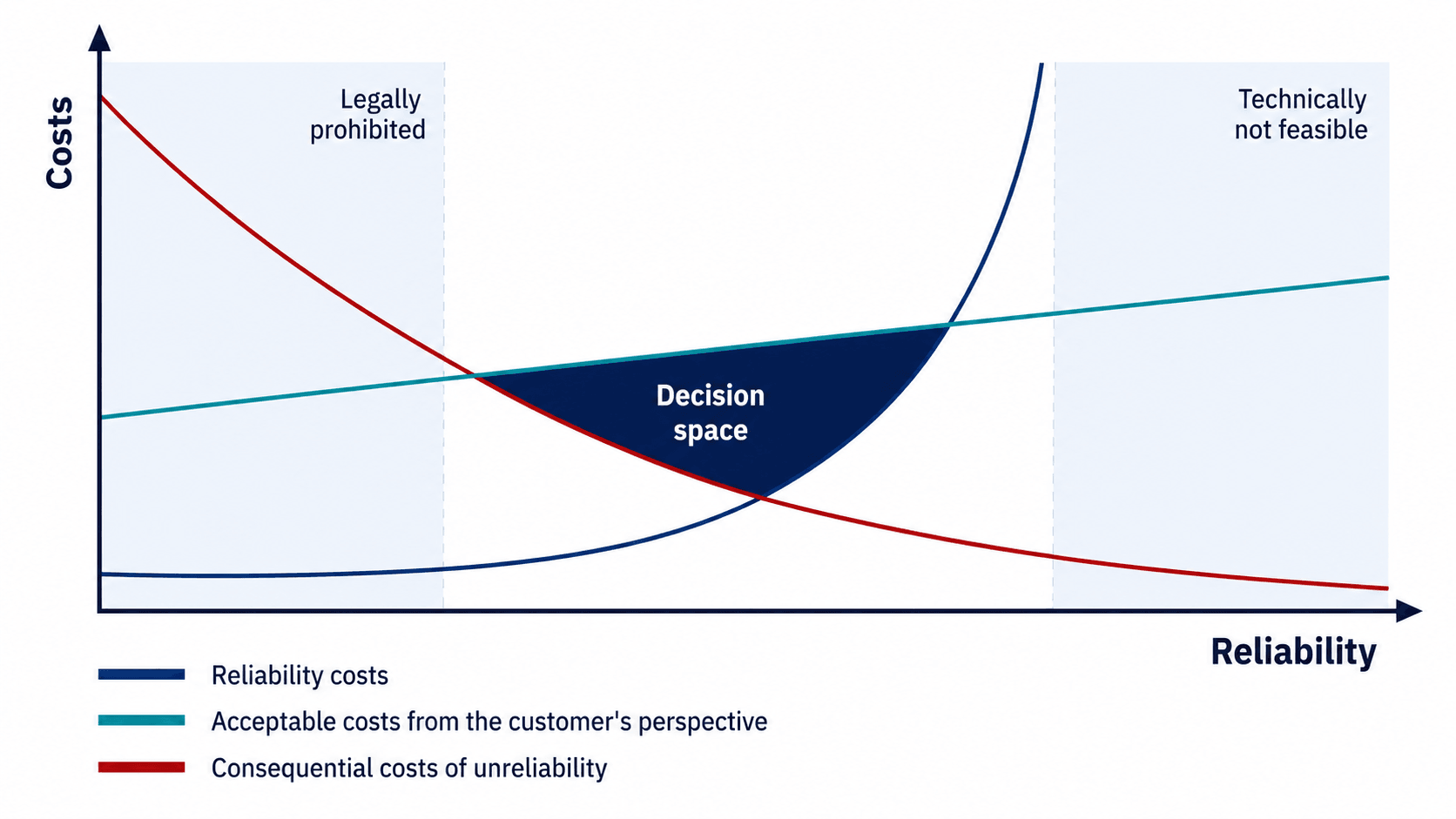
Planning balances the cost of a reliable product, the consequences of insufficient reliability and an acceptable market price.
A useful plan therefore defines targets, work packages, interfaces, milestones and decision criteria instead of producing documentation for its own sake.