
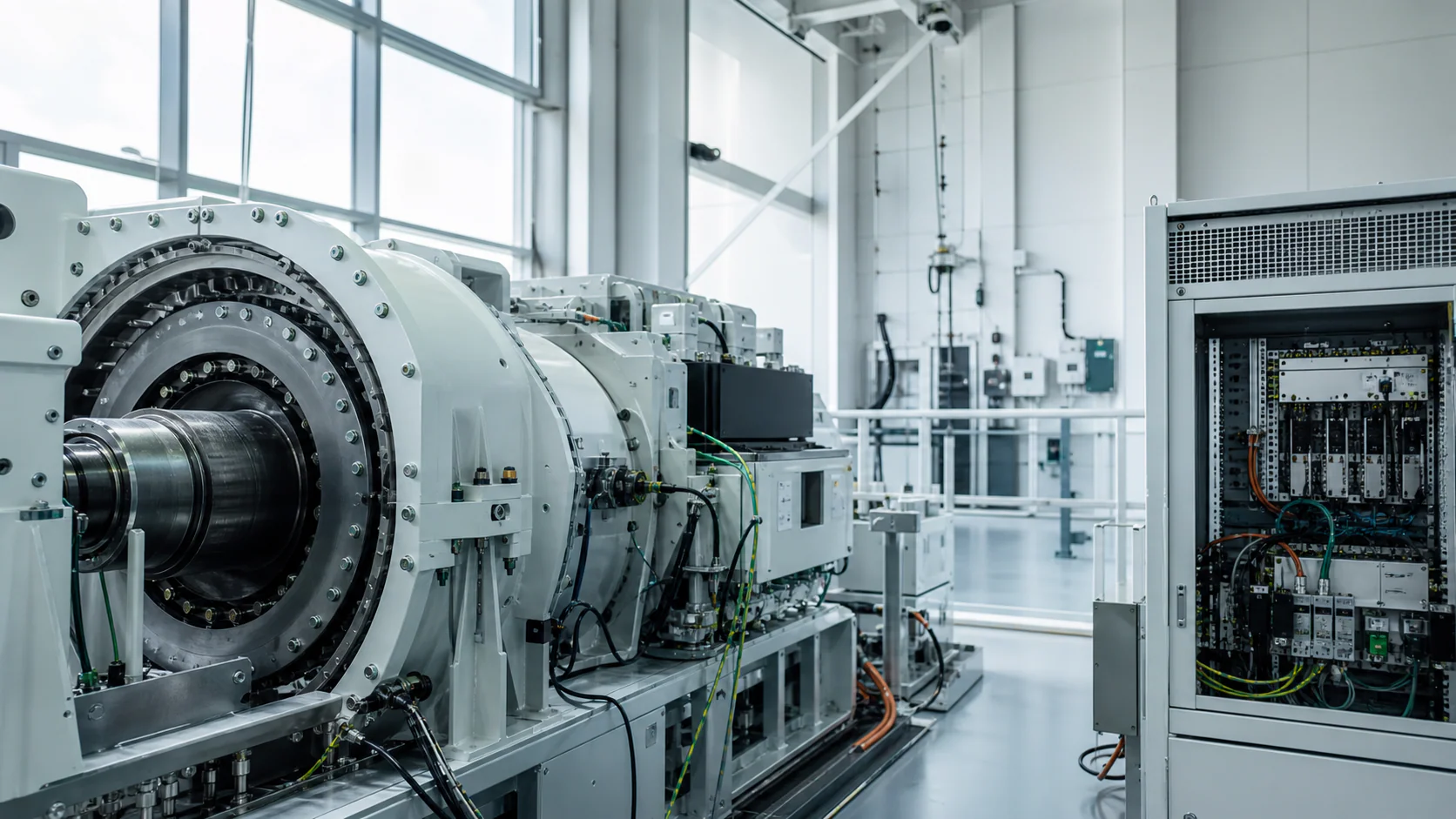
Reliability determines yield, maintenance and lifecycle cost in renewable assets
Reliability of wind turbines, photovoltaic inverters and battery storage systems is directly tied to energy yield and service cost. Variable environmental loads, remote locations and long design lives make failures far more expensive than the component price alone.
RelTest connects wind turbine reliability, power-electronics lifetime, condition monitoring, field data analysis and risk-based maintenance. Test and operating data are assessed so that design improvement, spares strategy and maintenance timing support the same technical and commercial objective.
In the field, availability matters as much as component lifetime.
RelTest combines load and environmental data with failure and maintenance information. This reveals critical components, realistic lifetime assumptions and commercially effective improvements.
- SiteAssess wind, temperature, humidity, grid and operation.
- SystemEvaluate critical components and dependencies.
- FieldStructure SCADA, failure and maintenance data robustly.
- PredictionQuantify lifetime, availability and action effectiveness.
Reliability along the energy path
Mechanical major components, power electronics and storage follow different ageing logics but affect the same asset value.
Wind-turbine drivetrain
Turbulence, grid events, start-stop cycles and control produce non-stationary bearing and gear loads.
Risk fieldBearing and gearbox damage, lubrication problems, misalignment and long repair-related downtime.
EvidenceSCADA and condition-monitoring data, returned-part findings, load collectives and a reliability model.
Rotor blade
Rain, particles, UV, lightning and cyclic bending act on structure and surface for decades.
Risk fieldLeading-edge erosion, delamination, bond defects, lightning damage and yield loss.
EvidenceInspection data, material and subcomponent tests, fatigue evidence and degradation trends.
PV or storage inverter
Daily cycles, high temperature, partial load and grid transients stress power modules and the DC link.
Risk fieldPower-cycling damage, capacitor ageing, fan failure, insulation and control faults.
EvidenceMission profile, thermal model, accelerated tests and field analysis by location and operating mode.
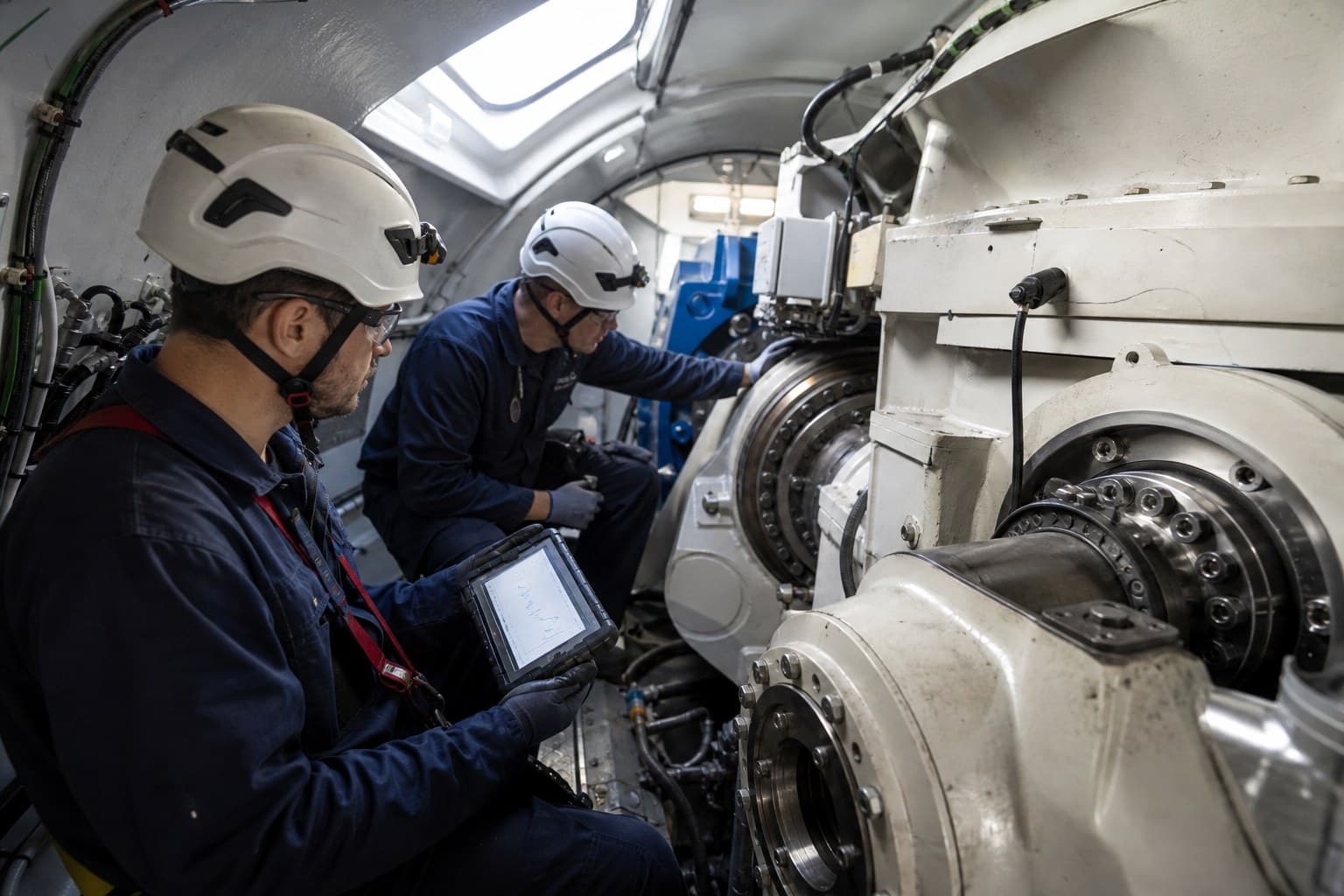
Inspection of a drivetrain in the nacelle
A physical bearing or gearbox finding becomes meaningful when it is combined with load, site and condition data. This reveals recurring mechanisms and supports better priorities for maintenance, spares and design action.
Project example: Make gearbox events from multiple wind farms comparable
- Challenge
- SCADA alarms, service reports and component replacements use different codes. A single failure rate explains neither site differences nor operating-strategy effects.
- Approach
- RelTest defines system boundaries and events, harmonises operating and damage data, represents exposure and censoring, and analyses load, site and supplier features.
- Result
- Operators gain a robust component ranking, more transparent spares and maintenance planning, and engineering hypotheses for design and operation.
Deliverables: harmonised event logic · site-specific reliability metrics · criticality and cost assessment · monitoring and action plan
Mission profile of a PV or storage inverter
Temperature and power cycles across the day, year and site drive the stress on semiconductors, capacitors and cooling. The mission profile translates actual use into test loads and defensible lifetime statements.
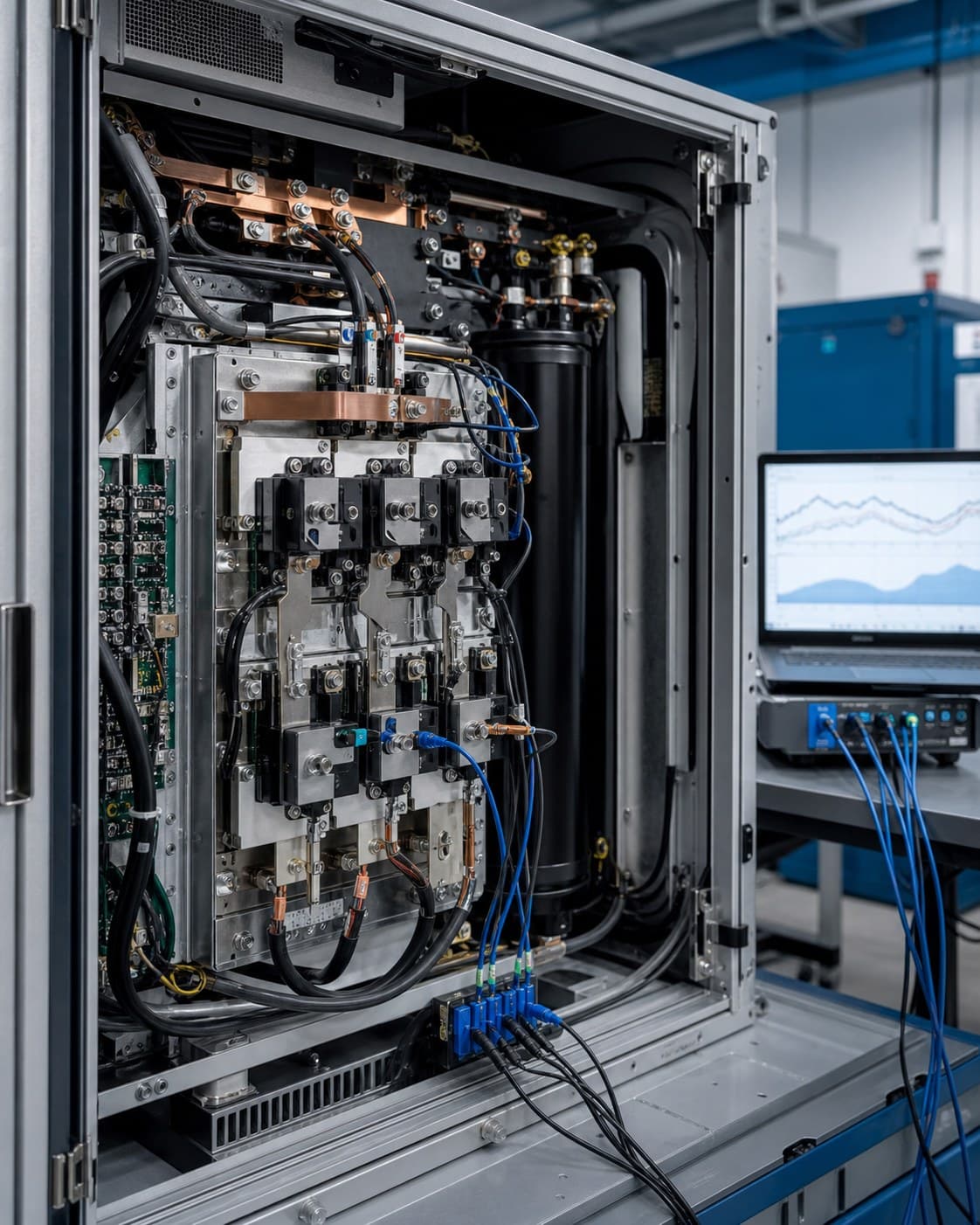
Practical example: Rotor-blade and drivetrain testing demonstrate the value of representative loads
The U.S. Department of Energy describes how large-scale blade and drivetrain testing has shaped fatigue-validation methods and wind-turbine reliability since the 1990s. The decisive advance was not more test load, but a more representative description of effective loads.
For current wind-energy projects, test data, field loads and condition monitoring must refer to the same mechanism and system boundary.
Managing reliability over long operating periods
We support component suppliers and system owners in new development, fleet analysis and the assessment of existing reliability issues.
Lifetime and availability models
We assess load spectra, reliability targets and system dependencies and develop robust predictions for different use conditions.
Focus areas: Lifetime prediction · System reliability · Availability
Explore serviceRisks and assurance strategy
Critical components, failure consequences and evidence needs are prioritised to form an economically sound assurance plan.
Focus areas: FMEA and FTA · Criticality · Maintenance strategy
Explore serviceField, test and condition data
We connect test-bench, fleet and condition-monitoring data to understand failure patterns and improve predictions.
Focus areas: Field data · Health monitoring · Statistical prediction
Explore serviceTechnical knowledge
Prognosis and assurance connect development evidence with later operations and maintenance decisions.
Questions we clarify at project start
Which components drive downtime and failure cost?
Combined criticality and data analysis separates frequent disturbances from rare but expensive failures.
Can fleet data be compared across sites?
Operating conditions and data quality are normalised before failure rates or lifetime distributions are compared.
How robust is a lifetime extension?
Load history, inspection, failures and model uncertainty are included transparently.
Which tests represent field loads?
We prioritise mechanisms and translate real loads into accelerated but physically plausible profiles.
Engineering context
Reliability across the asset lifecycle. The data basis and decision change from design to extended operation. The method must therefore evolve and systematically integrate new field evidence.
IEC 61400 context · Wind turbine drivetrains · SCADA and fleet data · Condition monitoring