
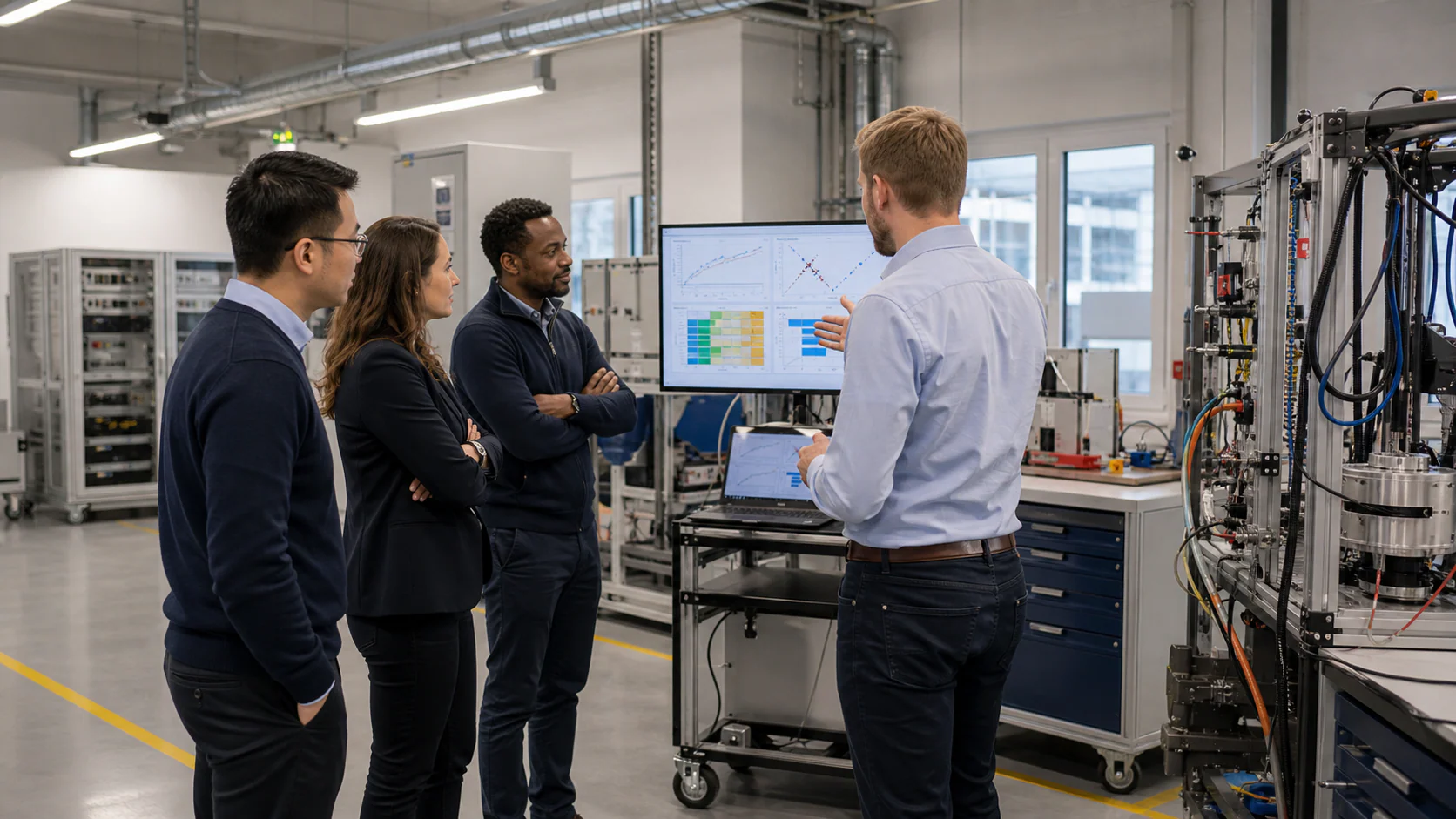
Production reliability starts at the bottleneck, not at the global MTBF average
Reliability in production engineering determines output, scrap, labour effort and delivery performance. For assembly lines, robots, presses, test stands or process equipment, however, events are not equally relevant: system boundary, cycle dependency, redundancy and repair time determine the real production impact.
RelTest analyses equipment availability, MTBF and MTTR, downtime and maintenance data, critical assemblies and condition-monitoring signals. Instead of reporting metrics alone, failure mechanism, bottleneck effect and action effectiveness are connected traceably.
Availability improves when technical cause and operational impact are assessed together.
RelTest structures disturbances, downtime, maintenance events and equipment context. The result is not just reporting, but a technical priority for design, operation and maintenance.
- SystemDefine functions, dependencies and bottleneck components.
- EventSeparate disturbance, failure, repair and planned maintenance.
- MetricEvaluate failure rate, MTBF, MTTR and availability correctly.
- ImprovementPrioritise technical and organisational actions by impact.
Assess production equipment by bottleneck impact
A rare failure at the bottleneck can matter more than many short disruptions at a buffered station.
Robot axis
Dynamic motion, cable routing, gearbox and gripper affect cycle time and positioning accuracy.
Risk fieldGear wear, cable break, lubrication deficit, sensor fault and gradual precision loss.
EvidenceMotion and load classes, alarm history, condition features and functional limits rather than downtime alone.
Joining or press station
Force-displacement process, tool condition, material lot and feeding determine capability and availability.
Risk fieldTool wear, misalignment, sensor drift, feeding fault and undetected quality risk.
EvidenceProcess data, DoE, fault-reason logic and links between quality and maintenance events.
End-of-line tester
Test equipment, adapters, software and limit logic influence production cycle and product decisions.
Risk fieldFalse fail, missed defect, contact wear, drift and software-related downtime.
EvidenceMeasurement-system analysis, repeatability and reproducibility, adapter life and clear fault classification.
Bottleneck analysis on an assembly line
Not every stop affects output to the same degree. Cycle time, event sequence and buffer state reveal which station truly constrains the process and where reliability action creates the greatest production benefit.
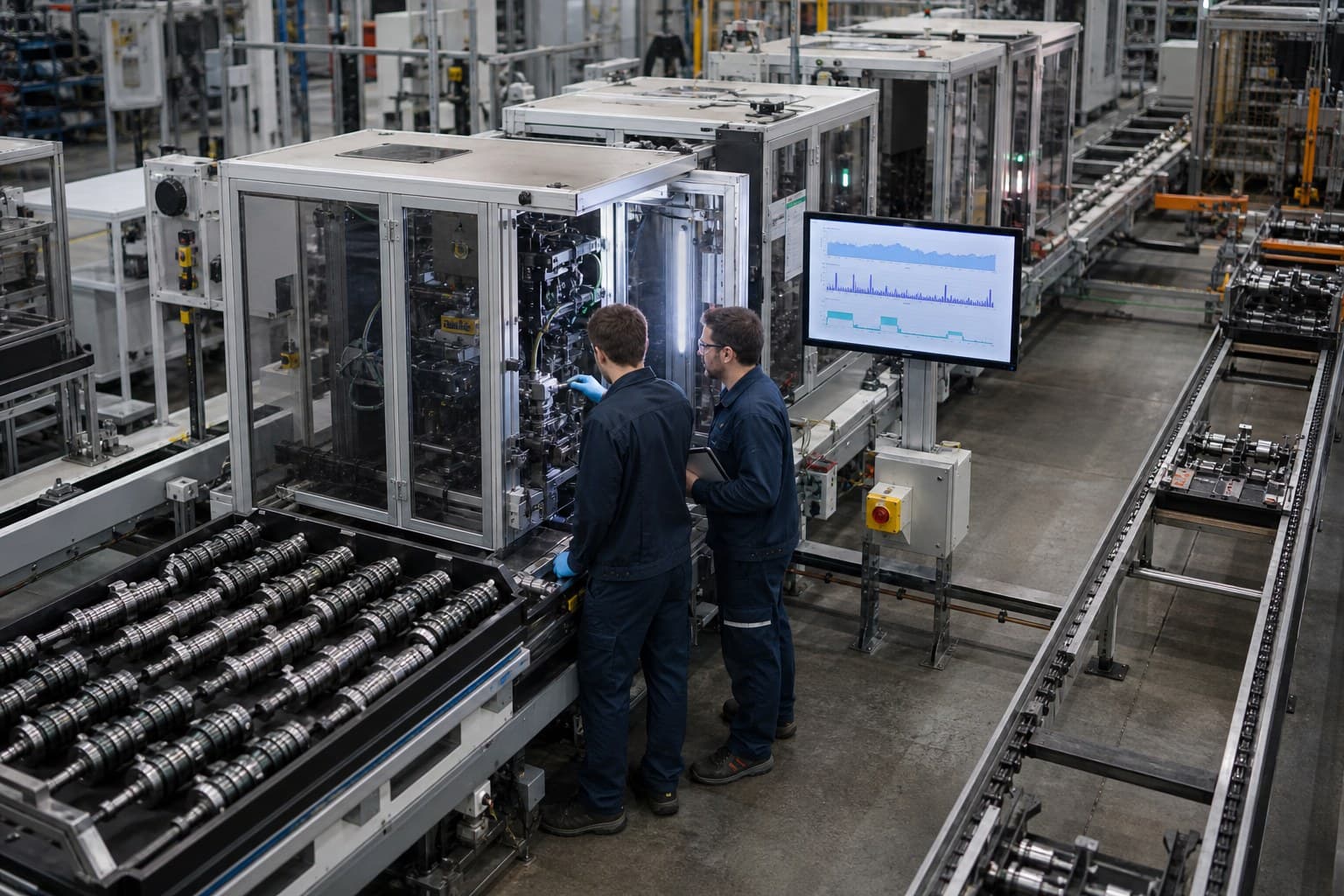
Project example: Translate assembly-line fault messages into engineering actions
- Challenge
- The line produces thousands of alarms and MTBF and OEE are known, yet unplanned downtime repeats and actions are prioritised by frequency rather than bottleneck effect.
- Approach
- RelTest harmonises event and system boundaries, separates root event from consequential alarms, ranks downtime by production impact and connects recurrence, repair time and physical mechanisms.
- Result
- Alarm data become a robust risk picture with specific design, spares, maintenance and monitoring actions for the critical stations.
Deliverables: cleaned fault-reason structure · bottleneck and criticality model · MTBF/MTTR assessment with limitations · prioritised action plan
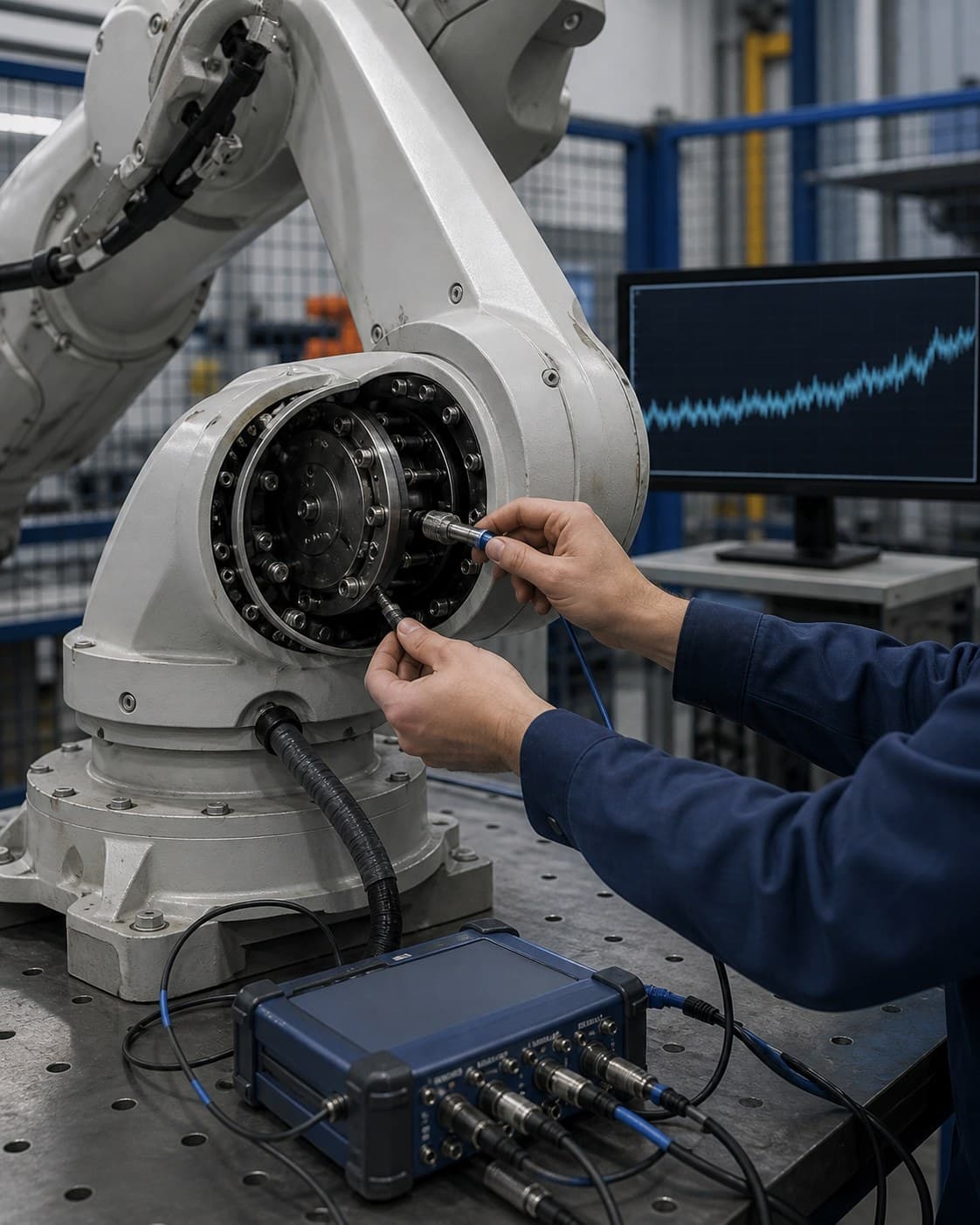
Condition feature of a robot axis
Vibration or current signals become actionable only when they are linked to load, function and a technical limit. This turns a trend into a justified maintenance decision before functional failure.
Turning production data into engineering decisions
We support equipment manufacturers and operators with availability questions, recurring failures and robust production-system development.
Equipment and system reliability
We model system structures, identify bottlenecks and assess how components and maintenance strategies affect technical availability.
Focus areas: RAM analysis · Availability · System model
Explore serviceWeaknesses and criticality
Failure consequences, frequency and restoration times are prioritised and linked to technical cause analysis.
Focus areas: Criticality · Root cause · Action portfolio
Explore serviceOperating and maintenance data
We create an analysable data structure, review quality and derive failure patterns, trends and predictions.
Focus areas: Failure data · Condition monitoring · Prognostics
Explore serviceTechnical knowledge
Prognosis, risk analysis and experimentation help turn condition data into effective engineering decisions.
Questions we clarify at project start
Which disturbance actually costs the most?
Frequency, duration, production impact and follow-on cost are combined rather than counting events only.
Can our maintenance data support analysis?
We review event definitions, timestamps, censoring and equipment reference and define a robust data structure.
Where is redesign better than more maintenance?
Failure mechanism, recurrence and action effectiveness reveal whether design, operation or maintenance is the better lever.
How can equipment availability be predicted?
Component reliability, redundancy, repair times and operating rules are connected in a traceable system model.
Engineering context
Metrics with engineering meaning. MTBF or availability are useful only when events are clearly defined and data are comparable. We therefore connect metrics to system boundaries and mechanisms.
ISO 14224 data logic · RAM and availability · MTBF and MTTR · Condition monitoring