
From trial and error to a planned investigation
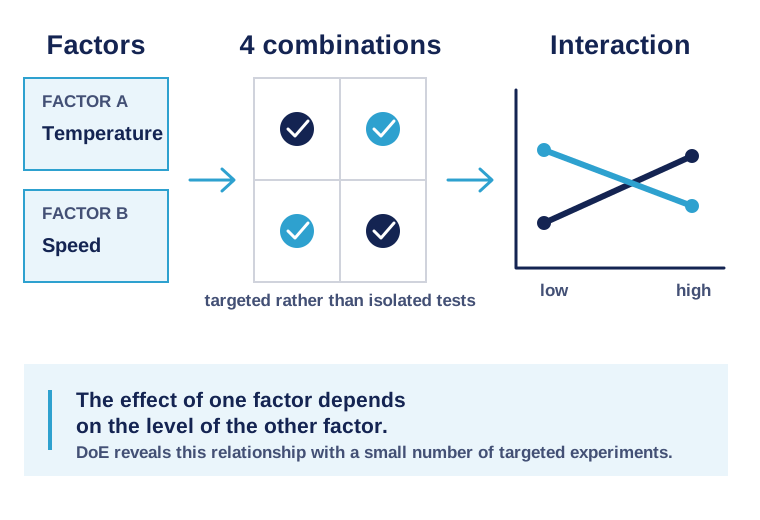
Changing one factor at a time hides interactions and quickly increases effort. DoE varies several factors according to a statistically reasoned design.
The work starts with a clear response, meaningful factors and levels and technically valid experimental boundaries.
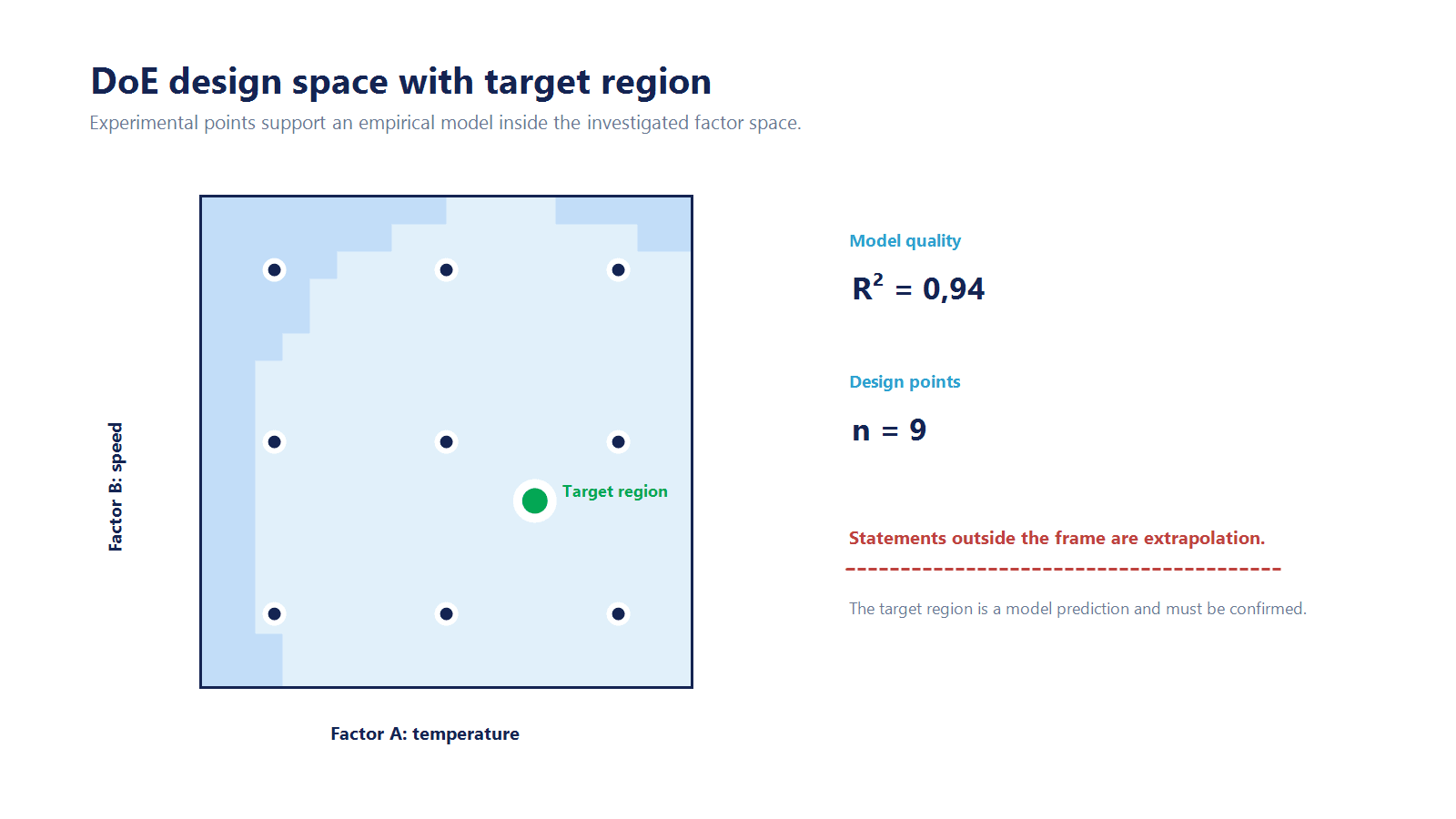
The marked experimental points cover the defined design space systematically; statements outside this space are extrapolations.
Identify effects and interactions
DoE reveals which factors matter and whether the effect of one factor depends on another.
An empirical model then supports prediction, sensitivity analysis and optimisation within the investigated design space. Model quality and residuals must be checked before technical interpretation.
Optimise for robustness
Engineering decisions should not target the best mean alone. Product and process settings must remain stable against manufacturing variation, environment and use.
DoE can include noise factors deliberately and improve the information gained per experiment.
- identify relevant factors and interactions
- optimise products and processes
- account for variation and noise
- focus testing on decision-relevant points