Assurance starts in development
Reliability cannot be tested into a finished product. Concept and design decisions offer the greatest leverage to avoid or control failure mechanisms.
Qualitative methods identify critical paths; quantitative methods assess lifetime, failure probability or availability. A robust strategy connects both.
Match methods to mechanics, electronics and software
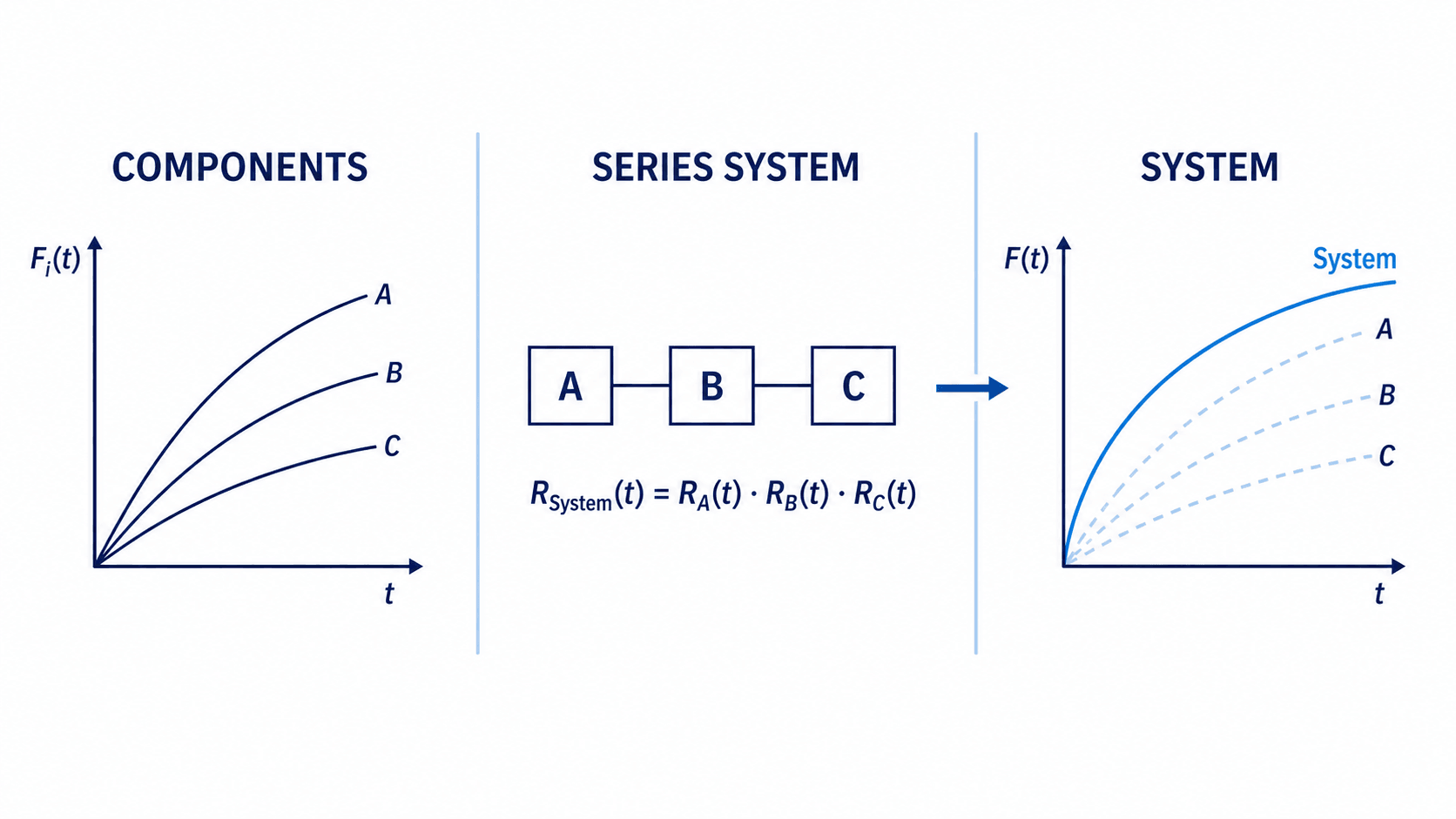
Mechanical fatigue, electronic ageing and software-related failure patterns require different evidence. Complex systems also demand attention to interfaces and common causes.
The method must fit the product and the failure physics rather than follow a generic checklist.
Test, simulate and document
Stochastic and numerical simulation can complement physical testing when models and inputs are sufficiently validated.
Evidence documentation records targets, methods, data, assumptions, uncertainty and results so that decisions remain traceable.
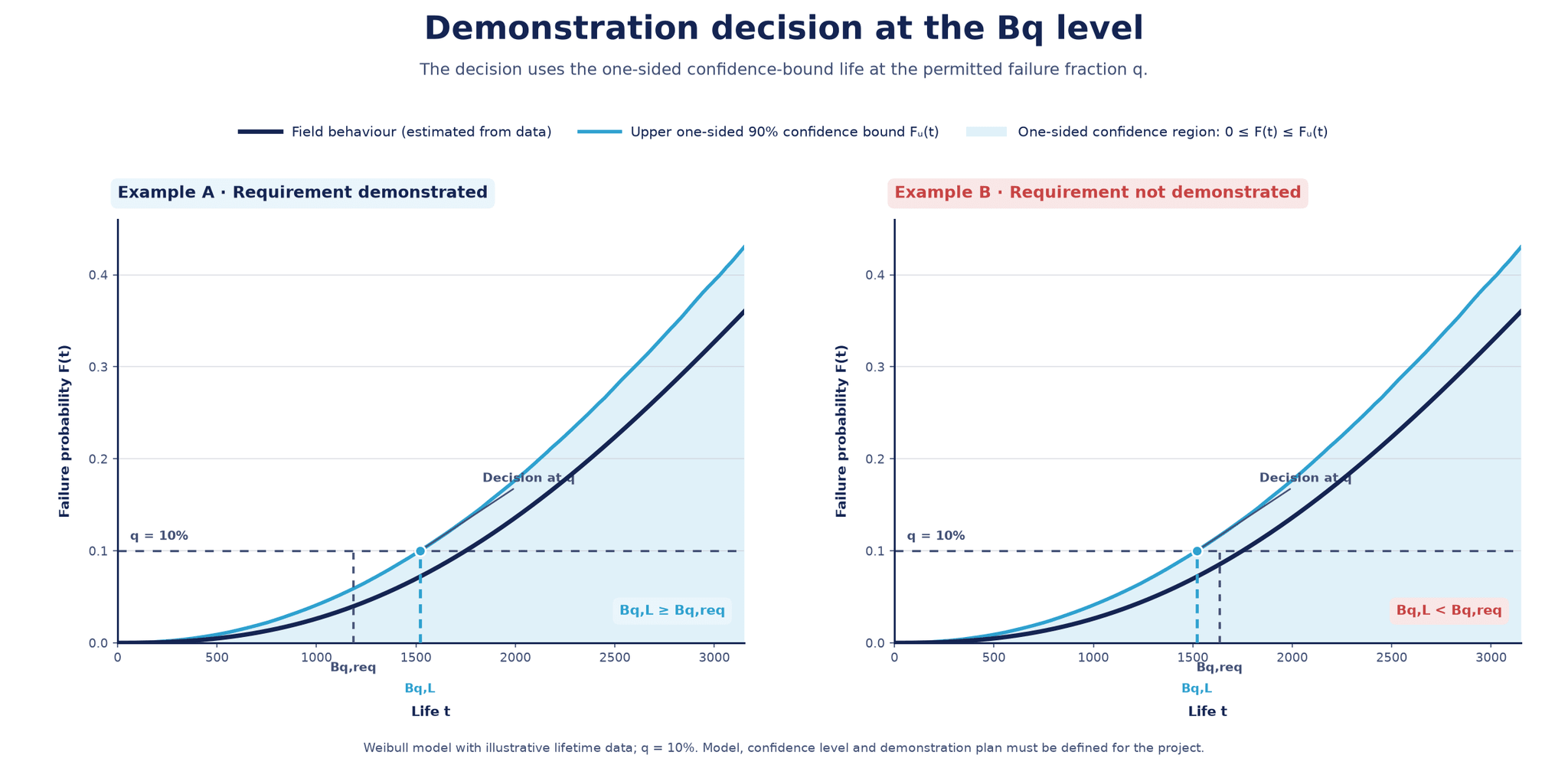
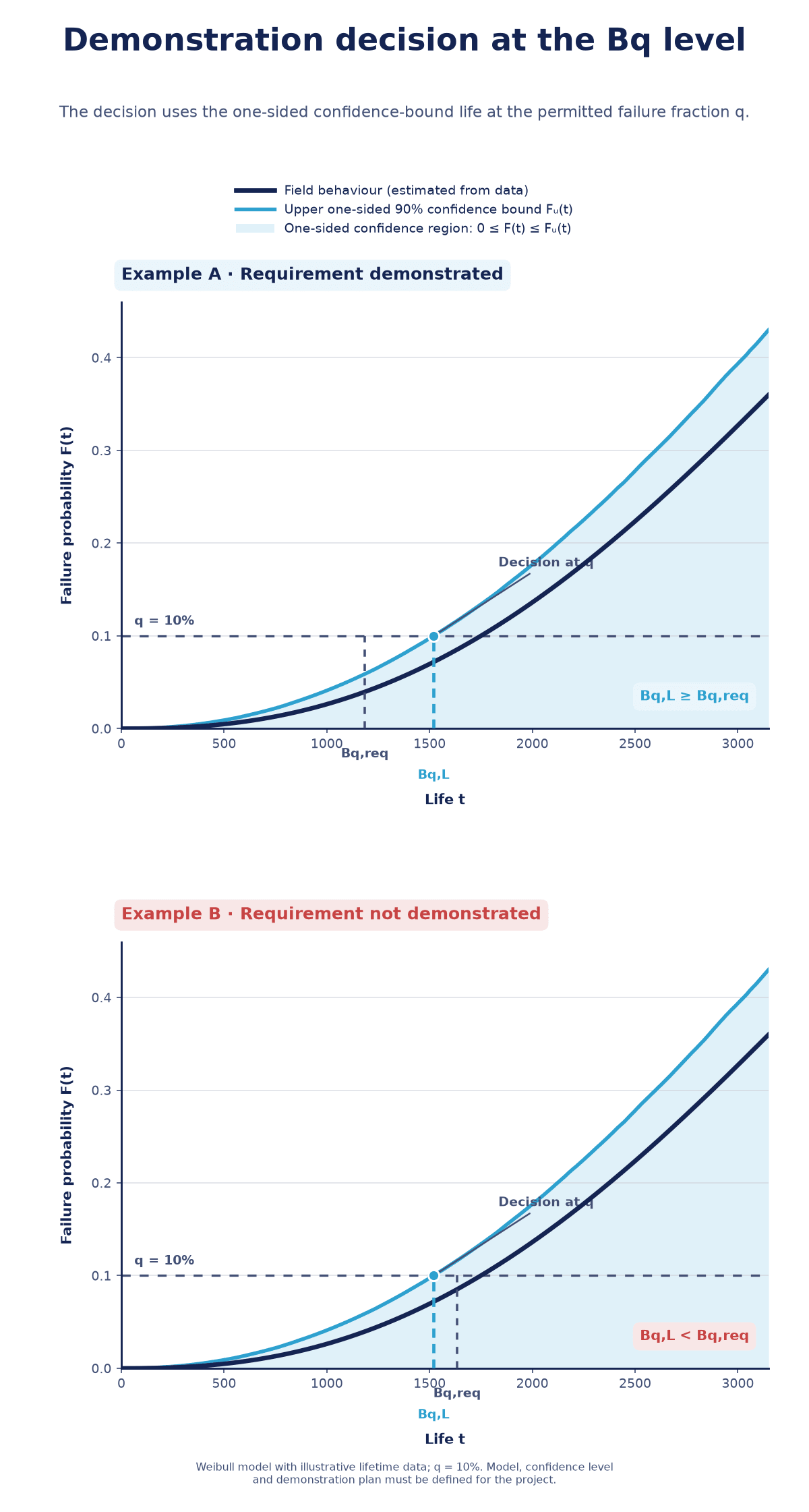
The decision is made at the permitted failure fraction q: the upper one-sided confidence bound of the estimated failure probability yields the conservative life Bq,L at that level.