
Automotive reliability is created between customer usage, test bench and series production
Automotive reliability engineering must consider driving profiles, temperature, vibration, charging behaviour and software states together. A validation plan is robust only when its load collective represents actual vehicle usage and excites the relevant failure mechanisms in electric drives, battery peripherals, ECUs or chassis components.
RelTest combines automotive lifetime testing, FMEA and FTA, Design of Experiments, warranty and field data analysis, and statistical reliability demonstration. Individual tests become a defensible release strategy for OEMs, Tier 1 suppliers and component development teams.
The number of tests is not decisive. The strength of their evidence is.
RelTest connects customer use, load spectra, component behaviour and field data in one test and evidence strategy. This creates robust decisions before series risks become warranty, cost or schedule problems.
- UseDescribe driving profiles, environments and customer populations.
- RiskPrioritise critical failure mechanisms and variation.
- TestingAlign DoE, lifetime tests and samples with the required claim.
- ReleaseCombine test and field data in traceable reliability evidence.
Three products, three different reliability questions
Automotive is not one uniform load case. Product function, installation position and customer population determine what a test can demonstrate.
Electric axle and drive
Torque collectives, bearing forces, cooling and highly dynamic operating changes act simultaneously.
Risk fieldBearing fatigue, seal wear, thermal ageing and interactions between inverter and electric machine.
EvidenceLoad-collective testing, temperature and vibration measurement, and a lifetime model that includes variation.
Battery cooling and auxiliaries
Pumps and valves operate under changing duty points, media conditions and ambient temperatures.
Risk fieldLeakage, dry running, contamination, blockage and gradual efficiency loss.
EvidenceDoE for influencing factors, accelerated test profiles and comparison with vehicle or fleet data.
ECU and ADAS sensing
Electronics, connectors, software and the vehicle electrical system form one functional chain.
Risk fieldSolder and contact problems, transients, humidity, diagnostic faults and intermittent failures.
EvidenceEnvironmental testing, failure hypotheses, event data and reproducible system tests across relevant states.
From driving profile to test bench
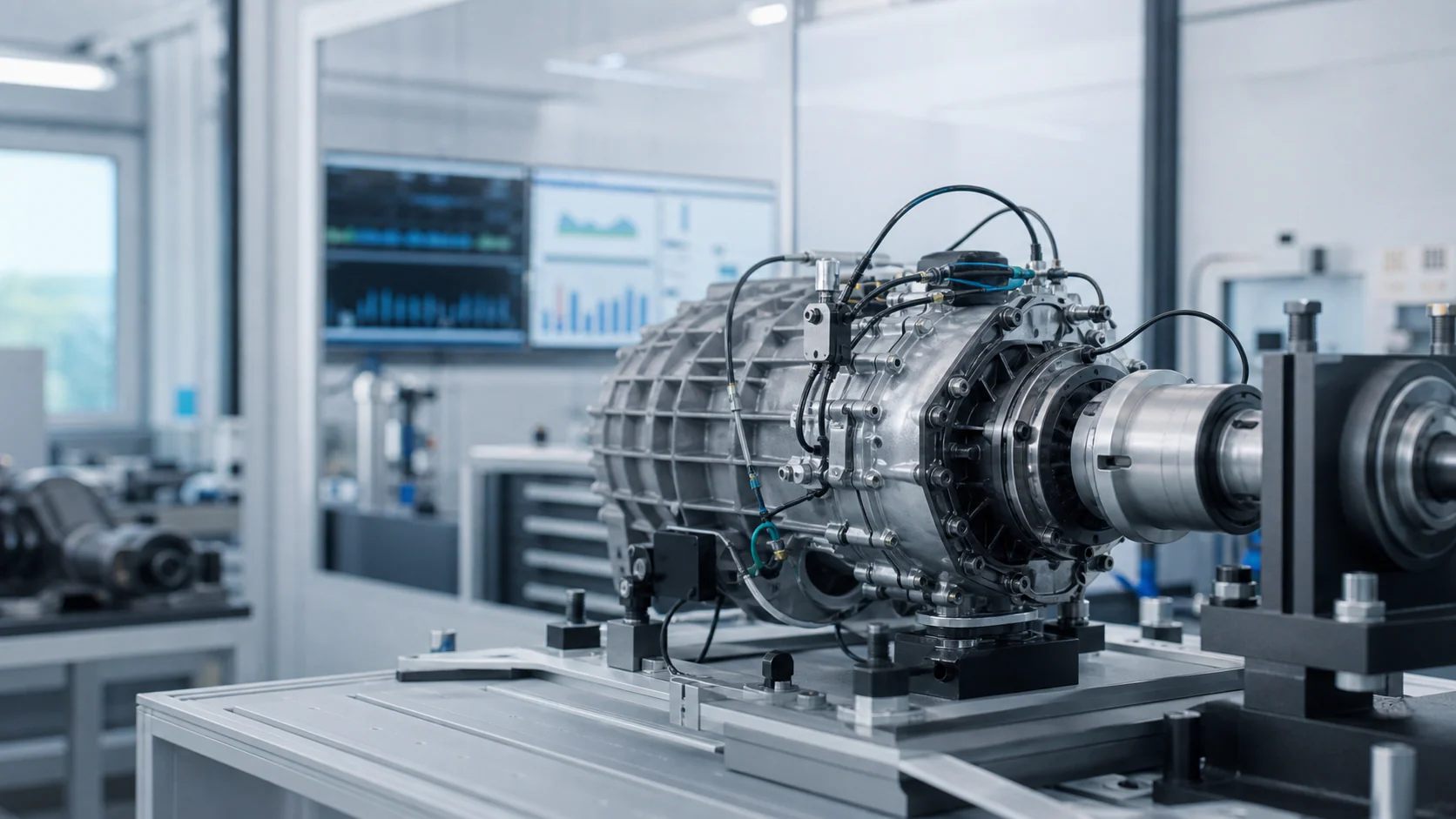
A test bench supports a release decision only when torque, temperature and dynamic operating changes from real use are translated into a reproducible load collective. The instrumented electric axle connects the usage profile, measured response and acceptance decision.
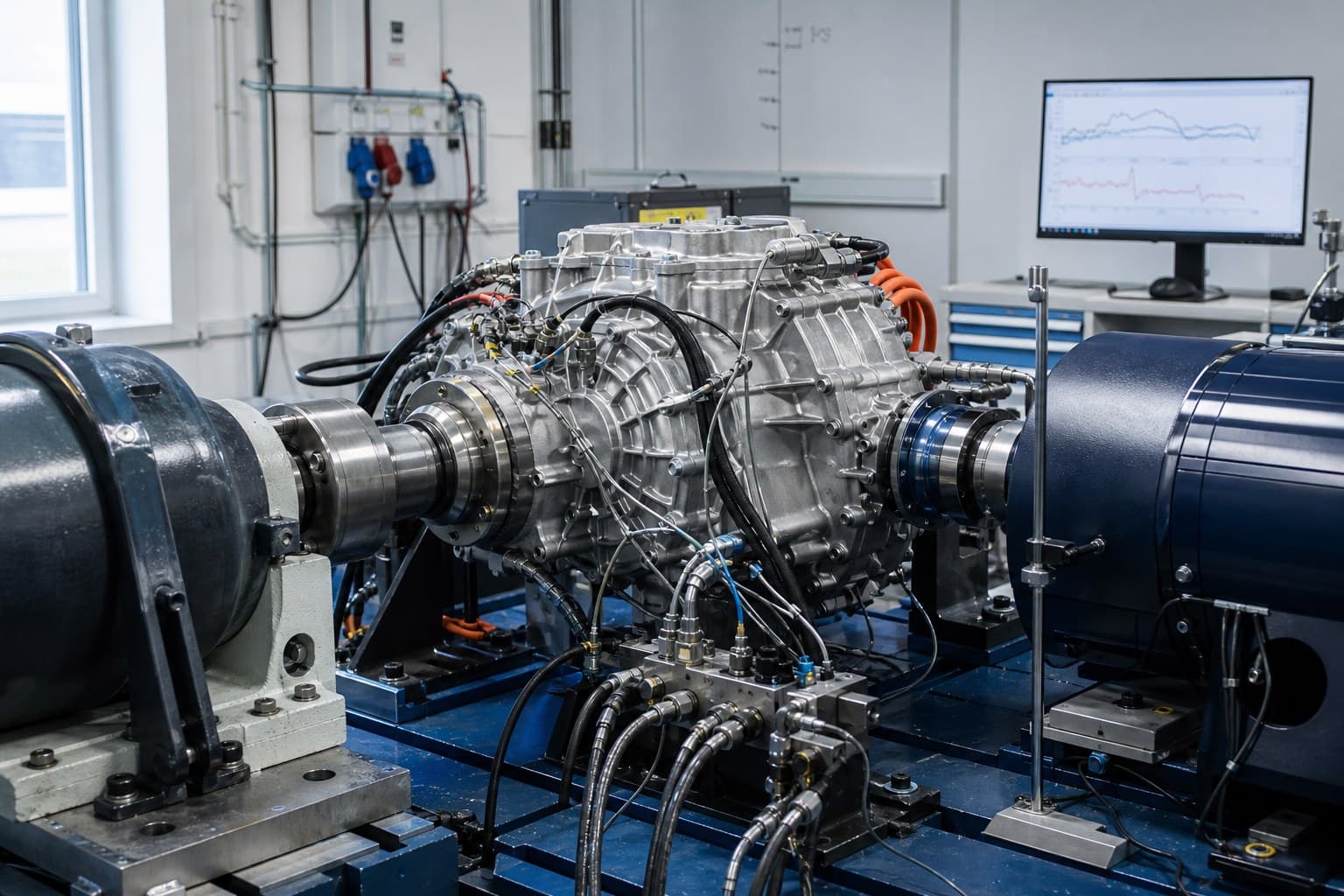
Project example: Develop a robust failure hypothesis from limited test-bench and warranty data
- Challenge
- An auxiliary component fails early in only a subset of vehicles. Bench tests show no clear fault, while field data contain different mileages and incomplete usage information.
- Approach
- RelTest structures censoring and mileage, segments vehicles by climate and use, aligns returned-part findings with load hypotheses and designs a focused DoE for seal, medium, temperature and operating transitions.
- Result
- The project delivers a prioritised causal hypothesis, a reproducible test and a documented basis for design change and release rather than an isolated curve.
Deliverables: cleaned field dataset · technical causal hypotheses · DoE and test plan · evidence and decision report
Connect warranty event and component finding
Warranty events become meaningful when mileage, usage and the physical component finding are assessed together. This creates testable causal hypotheses instead of a simple failure count.
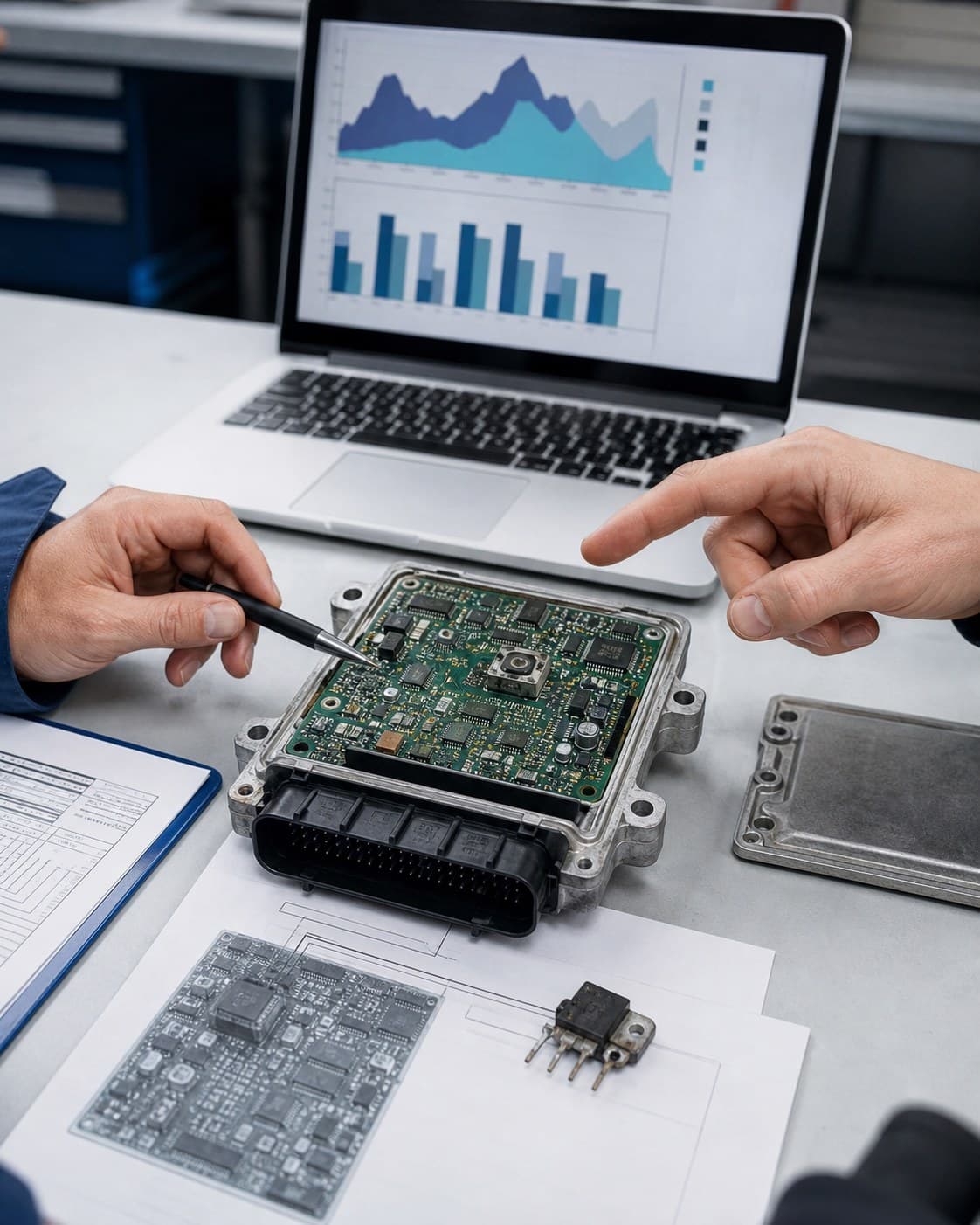
Practical example: Takata shows why environmental ageing and fleet segmentation cannot be an afterthought
The U.S. National Highway Traffic Safety Administration describes the Takata air-bag recalls as the largest and most complex vehicle recalls in U.S. history. The case demonstrates how ageing, heat and humidity, global vehicle populations and traceability jointly determine real risk.
The reliability lesson is clear: evidence must cover more than the new condition. It needs to represent ageing, regional use and uncertainty across the population.
Engineering services for automotive projects
Depending on project maturity, we address one focused question or integrate targets, risks, tests and data in a consistent assurance concept.
Reliability planning and lifetime
We derive measurable reliability targets from use and customer requirements, assess load spectra and translate them into development and evidence tasks.
Focus areas: Load spectra · Lifetime assessment · Reliability targets
Explore serviceRisk and technical assurance
FMEA, fault trees and technical reviews are applied so that critical mechanisms become visible early and actions remain traceable throughout the project.
Focus areas: FMEA and FTA · Assurance strategy · Evidence
Explore serviceTesting, DoE and field data
We plan efficient experiments, analyse lifetime and warranty data, and compare test-bench results with behaviour in the field.
Focus areas: Design of Experiments · Lifetime testing · Field data
Explore serviceTechnical knowledge
Methods are linked where they support a real development decision rather than presented as an isolated glossary.
Questions we clarify at project start
Does our test programme represent real customer use?
We compare load profiles, failure mechanisms and test conditions and reveal where evidence is too weak or unnecessarily expensive.
How can we decide with a limited number of samples?
Statistical demonstration planning connects target reliability, confidence, test duration and permitted failures.
What can warranty and field data tell us?
Failure times, mileage and use are cleaned, segmented and linked to technical hypotheses.
Where does DoE provide the greatest development value?
Experimental design identifies interactions, robust parameter regions and the tests that contribute most to the decision.
Engineering context
Compatible with automotive development environments. Our work integrates with existing development, quality and release processes. Requirements and internal standards are incorporated into the engineering argument without turning methods into an end in themselves.
ISO 26262 context · IATF-oriented processes · Warranty and field data · Accelerated testing