
Make risk technically concrete
A technical risk is more than a coloured matrix cell. It describes a possible failure mechanism in a specific use context and its consequences.
FMEA, FTA, field data, tests and expert knowledge provide different perspectives on the same decision.
Prioritise and define measures
Not every conceivable event deserves the same effort. Criteria support prioritisation but do not replace technical reasoning.
Design changes that avoid or control causes usually take priority over measures that only improve detection.
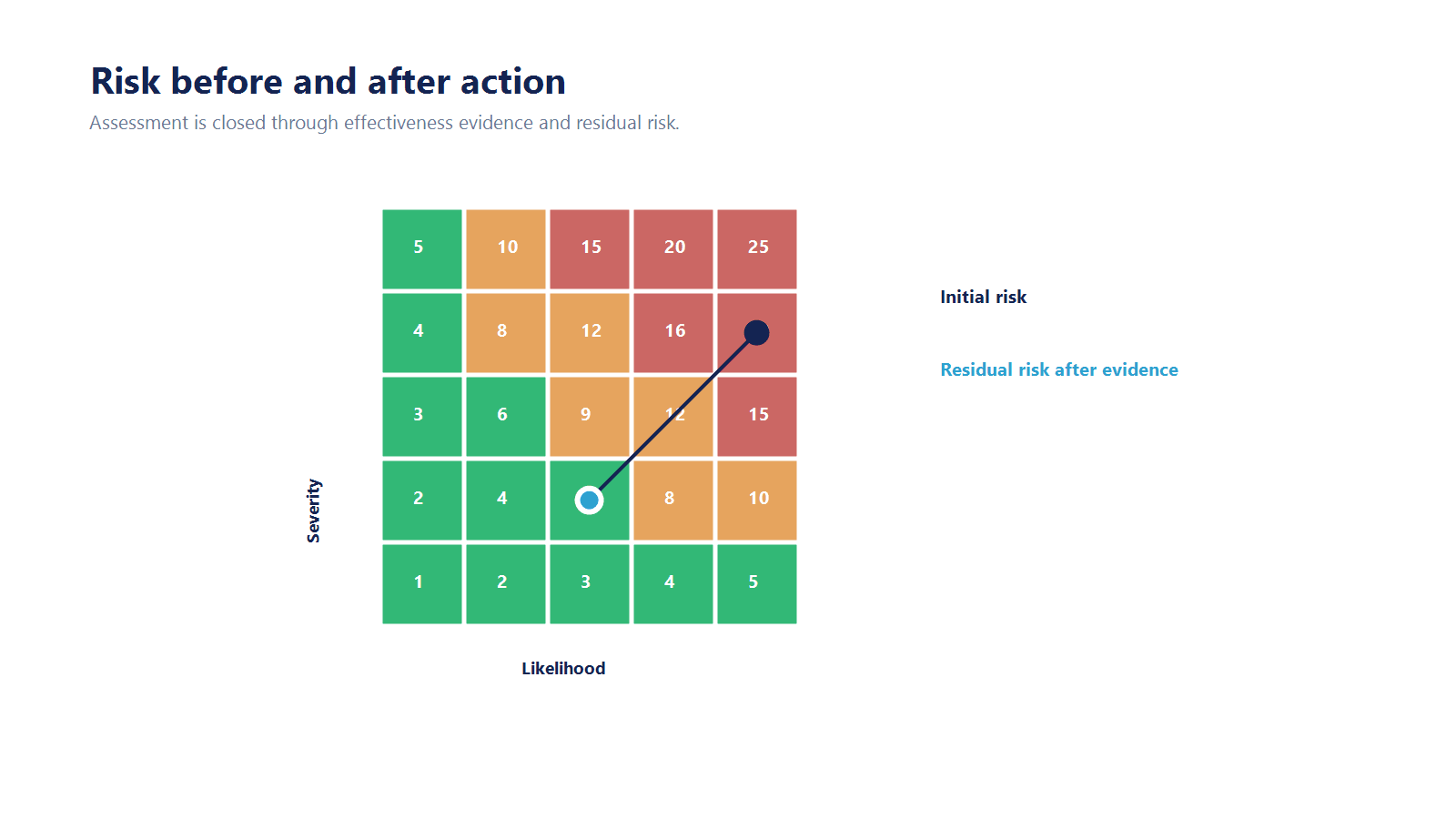
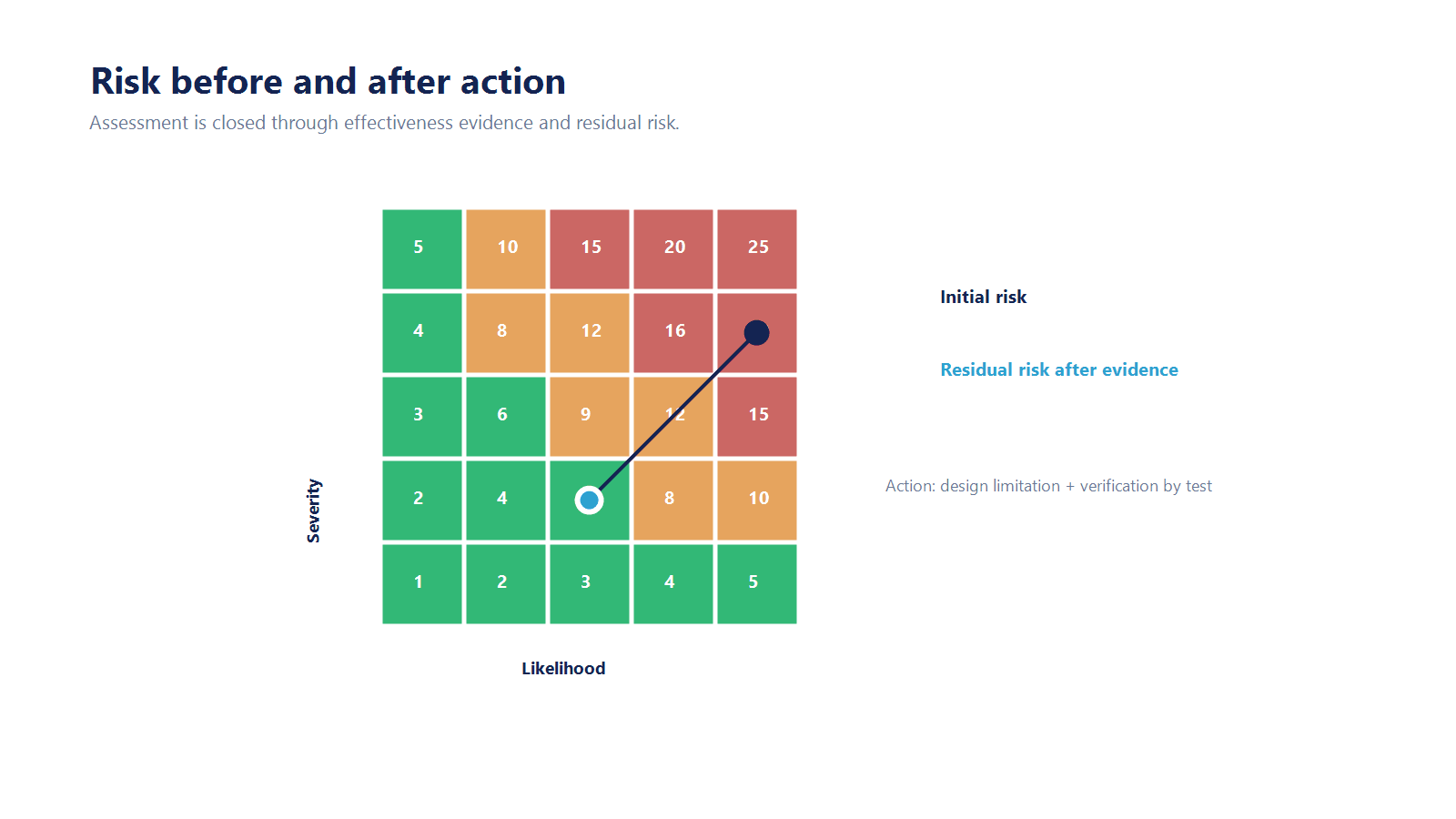
The risk matrix prioritises the initial situation; the work is complete only after technical action, evidence and residual-risk assessment.
Demonstrate effectiveness
A measure is complete only when its effect has been verified through reviews, simulation, tests or statistical analysis.
Traceable documentation links the original risk, decision, measure and result and supports state-of-the-art engineering practice.